Cart
0
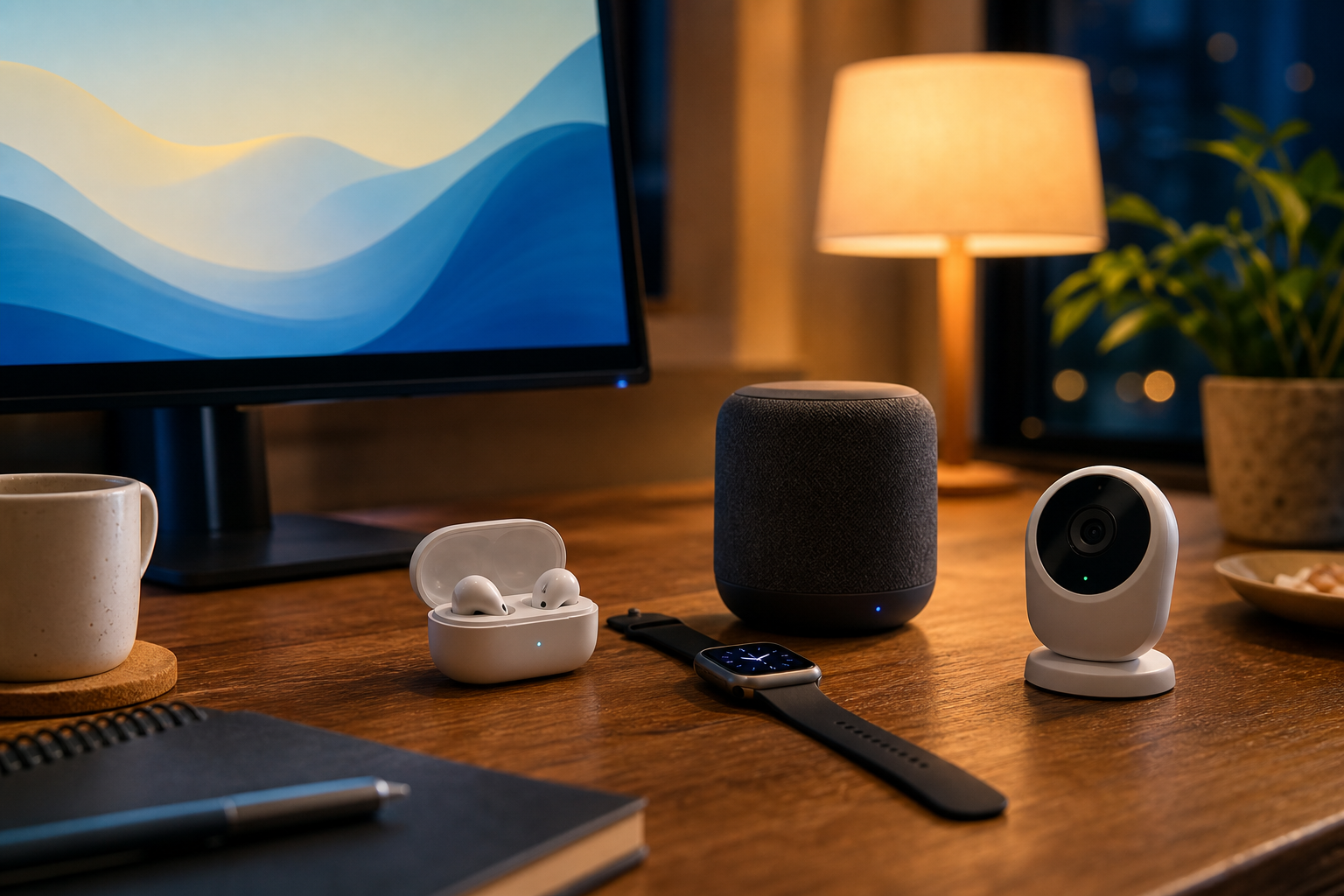
Most gadget roundups tell you a product is "revolutionary" and then describe the spec sheet. You're left wondering: okay, but what does this actually change about my Tuesday? This list is the opposite of that.
These five gadget categories are available right now, they're practical, and each one solves a specific, recognizable problem. No hype, no vague promises about "the future of tech."
1. True Wireless Earbuds with Active Noise Cancellation
The open-plan office, the loud commute, the neighbor who mows at 8 a.m. — noise-canceling earbuds have quietly become one of the most genuinely useful purchases in consumer tech. What separates the current generation from even two years ago is how small the form factor has gotten without sacrificing the cancellation quality.
What they actually do: the earbuds use tiny microphones to sample ambient sound and generate an opposing audio signal that cancels it out in real time. You're not just blocking sound with foam — you're actively erasing it. The practical result is that you can take a call in a coffee shop, focus during a flight, or listen to music on a loud street without cranking the volume to a level that damages your hearing over time.
Worth knowing: fit matters more than brand here. If the ear tips don't seal properly, you lose most of the ANC benefit. Most current models come with multiple tip sizes — take five minutes to find the right one and the difference is significant.
If you're still deciding between a wired and wireless setup, this breakdown of wired vs. wireless headphones walks through the trade-offs in detail.
2. Smart Home Security Cameras
The older version of home security meant a subscription to a monitoring company, a technician visit, and a system that cost hundreds before you'd seen a single frame of footage. The current generation of smart security cameras has dismantled all of that.
What they actually do: modern cameras connect directly to your home Wi-Fi, send motion-triggered alerts to your phone, and let you check a live feed from anywhere. Many now include local storage options so you're not locked into a cloud subscription to access your own footage. Some models distinguish between a person, a vehicle, and an animal — so you're not getting pinged every time a squirrel crosses your driveway.
The real-world use case most people underestimate: package theft. A visible camera at the front door is a meaningful deterrent, and the alert-to-phone feature means you know within seconds when a delivery arrives — or when something looks wrong.
3. Smartwatches and Fitness Trackers
Wearable tech had a hype cycle, then a reality check, and now it's quietly in a genuinely useful era. The category has split cleanly into two lanes: fitness-first trackers that prioritize health metrics and battery life, and smartwatches that lean into notifications and apps with fitness as a secondary feature.
What they actually do: at minimum, a modern fitness tracker logs steps, heart rate, and sleep quality passively — meaning you don't have to remember to start a workout for it to be useful. The more capable devices add blood oxygen monitoring, stress tracking via heart rate variability, and menstrual cycle tracking. Smartwatches layer on top of that: you can see texts, control music, and pay at a checkout without touching your phone.
The honest trade-off: the more features, the shorter the battery life. A slim fitness band might last a week or more on a charge. A feature-rich smartwatch might need charging every night. Neither is wrong — it depends on how you actually live with it.
4. Portable Bluetooth Speakers
This category sounds mundane until you've used a good one and then gone back to phone speakers. The gap between built-in phone audio and even a mid-range portable speaker is not subtle — it's the difference between sound that fills a room and sound that comes from a small rectangle on a table.
What they actually do: they wirelessly receive audio from your phone (or any Bluetooth source) and reproduce it through dedicated drivers with actual bass response. The practical upgrade is that you can move the speaker to wherever you are — the kitchen while cooking, the backyard, a hotel room — without worrying about cables or outlets.
What to look for right now: IP ratings for water resistance (useful if it's ever going near a pool or a kitchen sink), battery life in hours rather than vague claims, and whether the speaker supports pairing two units together for stereo sound. That last feature has become common even at mid-range price points and makes a real difference for music.
5. Monitors and Displays for Home Office Setups
Working from a laptop screen for eight hours a day is a slow drain on your focus and your neck. An external monitor doesn't sound exciting, but it's one of the highest-impact upgrades for anyone who works from home — and the current market has made genuinely good panels accessible at prices that would have bought you a mediocre screen a few years ago.
What they actually do: a larger display means more screen real estate, which means fewer windows stacked on top of each other and less time hunting for the tab you need. For anyone doing design, video editing, or even just managing multiple documents, the productivity difference is real. For gamers, higher refresh rates (measured in Hz) make motion smoother and more responsive — a spec that matters in fast-paced games in a way that's immediately visible.
The detail most people skip: check the inputs before buying. Make sure the monitor has the right ports for your laptop or desktop — HDMI, DisplayPort, USB-C — so you're not buying an adapter the same day the monitor arrives.
The Bottom Line
Good gadgets don't need you to change your life around them — they slot into the one you already have and quietly make it easier. The five categories above are doing exactly that right now, and none of them require you to be a tech enthusiast to get real value out of them.
Browse the full catalog at Electroeshop and find the gadget that fits your life today. With over 25,000 products across every major tech category, the odds are good that what you're looking for is already there.
Frequently Asked Questions
What's the most useful gadget to buy if you're on a budget?
It depends on your daily routine, but portable Bluetooth speakers and basic fitness trackers tend to deliver a lot of real-world value relative to their cost. Both categories have solid options at mid-range prices that don't require you to spend top dollar to get the core benefit.
Do I need a subscription to use a smart security camera?
Not necessarily. Many current smart cameras offer local storage via a microSD card or a connected hard drive, so you can access and review footage without a monthly cloud plan. Some features — like extended cloud history or advanced AI detection — may be behind a subscription, but basic live viewing and motion alerts are typically free.
How do I know which smartwatch or fitness tracker is right for me?
Start by deciding what you actually want to track. If sleep, steps, and heart rate are enough, a slim fitness band with long battery life is probably the better fit. If you want to see notifications, control music, or use apps from your wrist, a full smartwatch makes more sense — just be prepared for more frequent charging.
Are true wireless earbuds with ANC worth the extra cost over regular earbuds?
If you regularly use earbuds in noisy environments — commuting, open offices, flights, or busy households — active noise cancellation is worth it. The difference in focus and listening comfort is noticeable. If you mostly use earbuds in quiet settings, standard wireless earbuds without ANC will serve you just as well at a lower price.