Cart
0

You drop your earbuds into the case, snap it shut, and figure they'll be ready by morning. That part's true. What most people don't think about is whether those habits — charging overnight, topping up every chance you get, storing the case at 100% — are slowly wearing down the battery over months of use. They can be.
This isn't about being precious with your gear. It's about understanding what's actually happening inside that little case so you can make small adjustments that genuinely extend how long your earbuds stay useful. Let's get into it.
What's Actually Happening When You Put Earbuds in the Case
Wireless earbuds use lithium-ion or lithium-polymer batteries — the same chemistry found in your phone and laptop. The case isn't just a holder; it's a secondary battery pack with its own charge management circuit. When you seat the earbuds correctly (most use magnetic contacts or spring-loaded pins), the case detects them and begins transferring power from its internal cell to the earbuds' much smaller cells.
The key word there is correctly. If an earbud is slightly misaligned — common if you toss them in quickly — the contact isn't made and the bud simply sits there draining from standby draw while you think it's charging. You've probably experienced this: you grab your earbuds after a few hours in the case and one is inexplicably at 40% while the other is full.
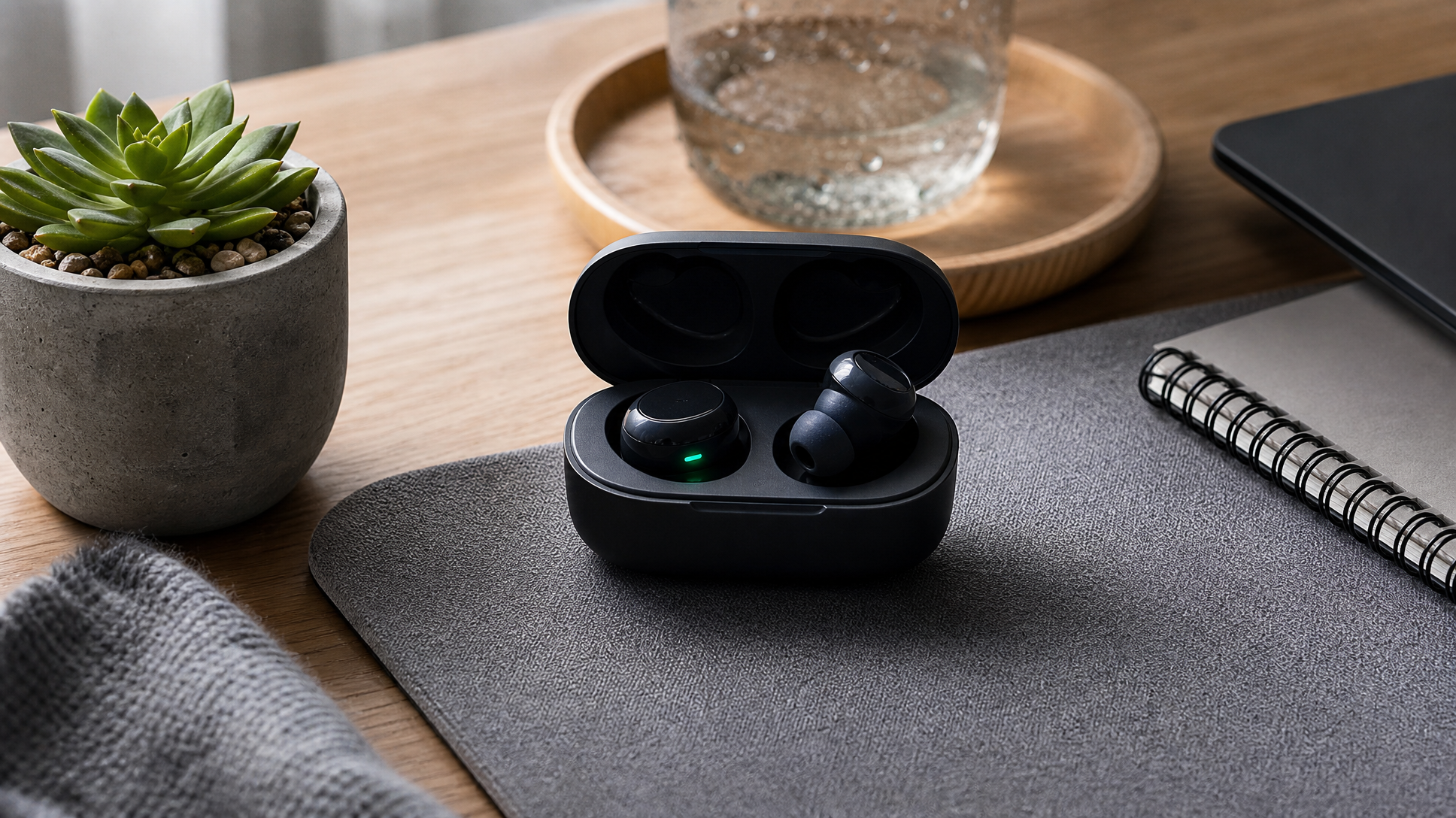
Always check that the LED indicator (on the case or the bud itself, depending on the model) confirms charging has started. A quick glance saves a dead earbud mid-commute.
The Chemistry Behind Battery Degradation
Lithium batteries degrade through charge cycles — each full discharge-to-recharge cycle causes a small, permanent reduction in the cell's maximum capacity. But the rate of degradation isn't linear; it's heavily influenced by two factors: heat and state of charge.
Lithium cells are happiest sitting somewhere in the middle of their charge range. Storing them consistently at or near 100% — or letting them drain to zero regularly — accelerates the chemical reactions that degrade capacity. This is well-documented in battery research and is the reason phone manufacturers like Apple and Samsung have introduced "optimized charging" modes that stop charging at 80% overnight.
Heat is the other enemy. Charging generates heat. Leaving a charging case plugged in on a sunny windowsill, in a hot car, or next to a laptop vent compounds the stress on the cells inside. The earbuds' tiny batteries are especially vulnerable because there's almost no thermal mass to buffer temperature spikes.
The Habits That Quietly Kill Battery Life
Charging to 100% every time, out of habit
Topping up the case every night when it's already at 70% isn't necessary — and it keeps the cells sitting at high voltage for longer than needed. Charging when the case is genuinely low (say, under 30–40%) is kinder to the battery than compulsive top-ups.
Leaving the case plugged in indefinitely
Most modern cases have overcharge protection, so you won't "fry" the battery by leaving it on the charger. But sustained high-voltage storage still degrades cells faster than storing them at a moderate charge level. If your earbuds support it, use any built-in charging limit or optimization feature the companion app offers.
Storing earbuds outside the case for long periods
Earbuds have a small standby draw even when not in use. Leave them on your desk for a few days and they'll drain completely — a deep discharge that stresses the cell. The case isn't just for charging; it's also the right storage environment. Keep them in it when you're not using them.
Ignoring the case's own battery
The case battery degrades too, and it's the one doing the most work. A case that can no longer hold a full charge means fewer top-ups between wall charges — and eventually, earbuds that need to be tethered to a cable far more often. Treating the case well is just as important as the earbuds themselves.
Charging in high-heat environments
Car cup holders in summer, direct sunlight on a desk, charging pads sandwiched under a laptop — all of these raise the temperature during the charging process. If the case feels noticeably warm while charging, move it somewhere cooler. Room temperature is ideal.
What Actually Extends Battery Longevity
None of this requires a dramatic lifestyle change. A few practical adjustments make a real difference over a year of use:
- Charge the case when it drops below 30–40%, rather than every night regardless of level.
- Don't leave the case on the charger for days at a time. Charge it up, unplug it, use it.
- Always store earbuds in the case when not in use — even for a few hours.
- Keep charging away from heat sources. A cool, shaded surface is all you need.
- Check your companion app for charging optimization settings if your earbuds support them. Some apps let you cap charge at 80% for daily use, which meaningfully extends cell life.
- Confirm seating before closing the lid. A quick LED check takes two seconds and guarantees you're actually charging.
None of these are inconvenient once they become habit. And the payoff is real: earbuds that still hold close to their original battery life after a year or two, rather than ones that need charging twice a day by month eight.
A Note on Wireless Charging Cases
Qi wireless charging is increasingly common on earbud cases, and it's genuinely convenient. One thing worth knowing: wireless charging is slightly less efficient than wired and generates a bit more heat in the process. On a well-designed pad with a well-designed case, this is minimal. But if you're charging wirelessly on a cheap, poorly ventilated pad, you're adding unnecessary thermal stress. For overnight or long charges, a wired connection is the lower-stress option.
When to Accept That the Battery Is Just Worn
Even with good habits, lithium batteries have a finite lifespan. If your earbuds are a few years old and the battery life has dropped noticeably from when they were new, that's normal degradation — not a defect. At that point, the question is whether the earbuds still serve your needs or whether it's time to replace them. If you're in the market for a new pair, it's worth paying attention to rated battery life (both earbud and case combined), whether the companion app offers charging controls, and how the case charges — wired only, or with wireless as an option.
If you're shopping now, you can browse the full range of wireless earbuds at Electroeshop and filter by the features that matter to your routine. And if you're still deciding between wired and wireless altogether, this guide on wired vs. wireless headphones covers the trade-offs honestly.
The earbuds you take care of are the ones that sound just as good two years from now as they did on day one.
Frequently Asked Questions
Is it bad to charge wireless earbuds every night even if they're not fully drained?
It's not catastrophic, but it's not ideal. Keeping lithium batteries at or near 100% for extended periods accelerates capacity degradation over time. A better habit is to charge when the case is genuinely low rather than topping up out of routine. If your earbuds' companion app offers an optimized or capped charging mode, enabling it is a practical middle ground.
Why does one earbud always have less battery than the other?
The most common reason is a poor seating connection — if one earbud isn't making full contact with the charging pins or magnetic contacts in the case, it won't charge properly. Check that both buds click or seat firmly and that the LED indicator confirms charging for each. Uneven battery can also happen if you use one earbud in mono mode more often, since that bud cycles more frequently.
Does wireless charging damage earbud case batteries faster than wired charging?
Wireless charging is slightly less efficient and generates a little more heat than wired, which can add marginal stress to the battery over time. In practice, the difference is small if you're using a quality charging pad and the case isn't getting hot. For long overnight charges, wired is the lower-stress option — but occasional wireless charging won't noticeably shorten battery lifespan.
How do I know when my earbud battery is genuinely worn out versus just needing a charge?
A worn battery shows a consistent pattern: the earbuds drain noticeably faster than they used to under the same usage, even after a full charge, and the drop-off gets worse over time. If your earbuds used to last several hours and now struggle past an hour or two, that's capacity degradation rather than a one-off drain. Most companion apps show battery percentage in real time, which makes it easier to track whether maximum charge is declining.