Cart
0
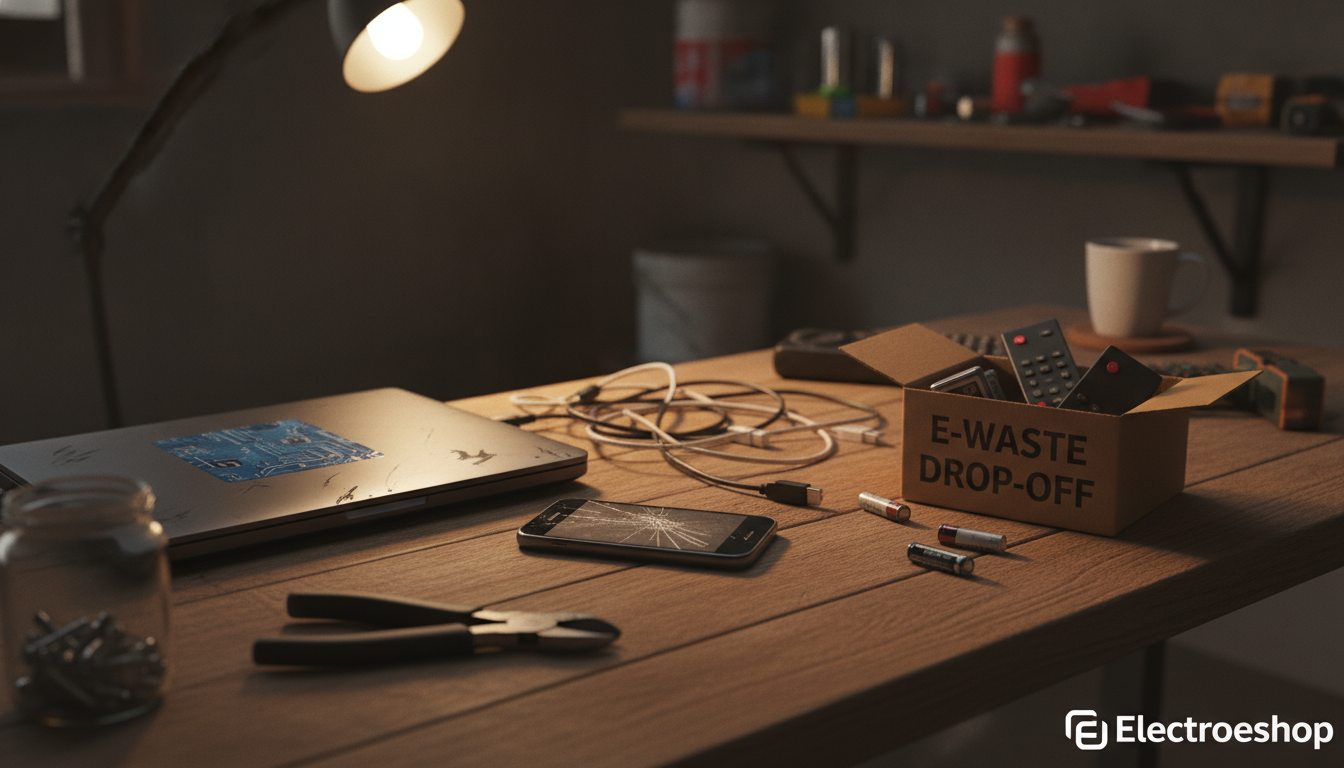
The drawer full of dead devices
You probably have one. A junk drawer, a box in the closet, or a shelf in the garage holding a phone from three upgrades ago, a pair of earbuds with a fraying cable, and maybe a laptop that takes eight minutes to boot. You know you shouldn't throw them in the trash. You've heard "e-waste" is a problem. But beyond that vague awareness, most people have no idea what actually happens when you hand over an old gadget for recycling — or where to even do it.
That uncertainty is exactly why those devices sit in drawers for years. So here's the real picture, from drop-off to what gets recovered on the other end.
Why electronics can't just go in the bin
Electronics contain a mix of materials that are genuinely useful and genuinely hazardous — sometimes in the same component. Circuit boards hold gold, silver, copper, and palladium. Batteries contain lithium, cobalt, or lead. Screens may contain mercury. When these end up in a landfill, the hazardous materials can leach into soil and groundwater. When they're properly recycled, the valuable metals get recovered and fed back into manufacturing — reducing the need to mine new raw materials.
That's the actual case for e-waste recycling. Not just "it's the right thing to do," but that there's real material value sitting inside your old phone, and the alternative to recovering it is pollution.
Step 1: Drop-off
The first step is simply getting your device to a certified recycler. In the US, the most common options are:
- Manufacturer take-back programs — Many major electronics brands run their own recycling programs, sometimes offering store credit or trade-in value in return.
- Retailer drop-off — Large electronics retailers often have in-store collection bins for small devices like phones, cables, and batteries.
- Municipal e-waste events — Many cities and counties run periodic collection events, often free for residents. Check your local government's website for schedules.
- Certified e-waste recyclers — Organizations certified under programs like e-Stewards or R2 (Responsible Recycling) accept devices directly. These certifications matter: they mean the facility meets specific environmental and data-security standards.
Is it free? Often yes, especially for consumer devices like phones, laptops, and small appliances. Some facilities charge for items like large monitors or televisions. It depends on the program and the item, so it's worth checking before you haul anything over.
Step 2: Sorting and data destruction
Once your device arrives at a recycling facility, the first thing that happens isn't shredding — it's sorting. Technicians separate devices by type (phones, laptops, TVs, batteries) because each category follows a different processing path.
If your device still powers on, it may be assessed for refurbishment first. Devices that can be restored to working condition are often resold or donated, which is actually the better environmental outcome — reuse beats recycling every time.
For devices that are beyond repair, data destruction comes next. This is the step most people forget to ask about, and it matters. A reputable recycler will either perform a certified data wipe or physically destroy the storage component (hard drive, flash storage) so your personal data can't be recovered. If you're dropping off a device that ever held sensitive information, ask specifically how the facility handles this — a certified recycler will have a documented process and can often provide a certificate of destruction.
Before you drop anything off, do your own wipe first: factory reset the device and, if possible, remove or destroy the SIM card and any memory cards.
Step 3: Disassembly
After sorting and data handling, devices are manually disassembled — or in some cases, fed into industrial shredders. Manual disassembly is more labor-intensive but allows for better material separation. Batteries are almost always removed by hand first, because they're a fire risk in shredding equipment and require their own processing stream.
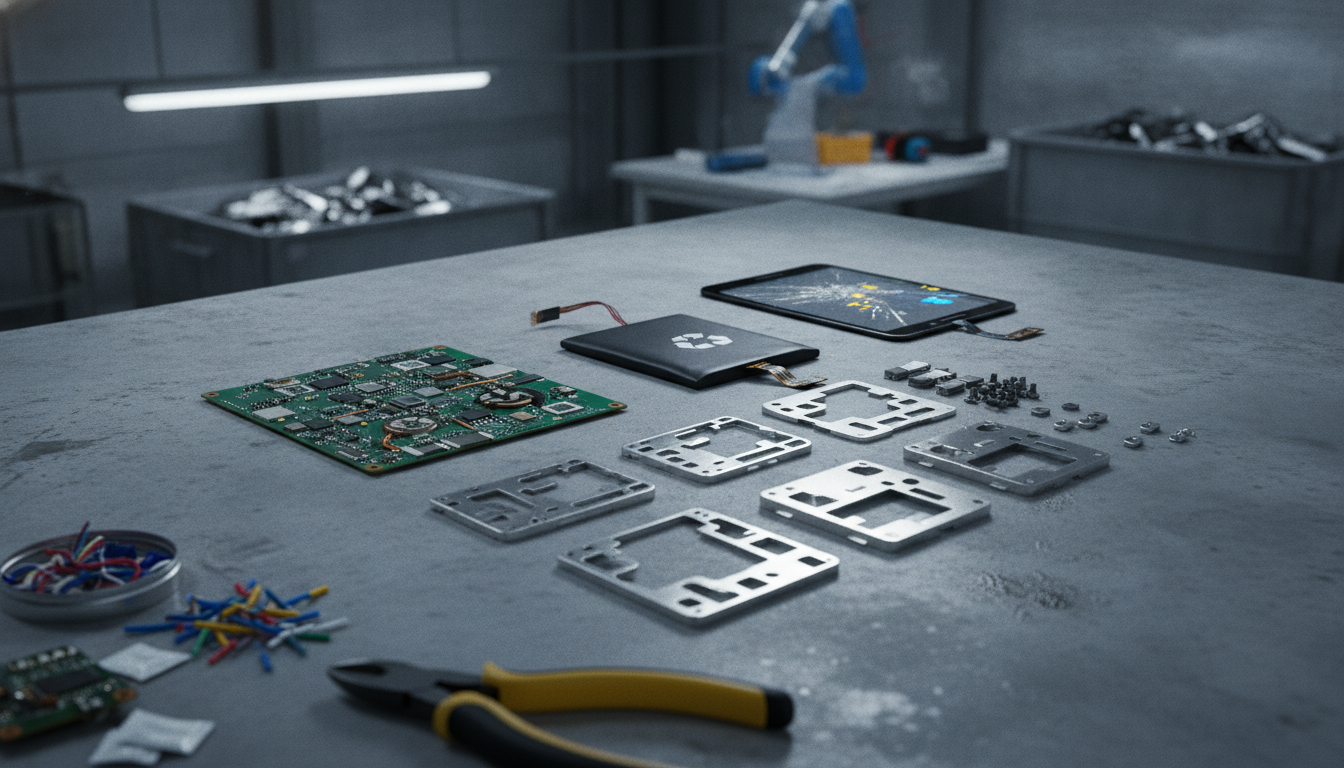
From a single smartphone, a disassembly line might separately pull out the battery, the screen assembly, the circuit board, the speaker components, and the metal chassis. Each goes to a different downstream processor.
Step 4: Material recovery
This is where the chemistry gets interesting. The shredded and separated materials go through a series of processes to extract usable raw materials:
- Circuit boards are smelted to recover precious metals. Gold, silver, copper, and palladium are all present in trace but meaningful quantities across large volumes of boards.
- Aluminum and steel from casings and frames are melted down and recycled as bulk metals — the same way a soda can gets recycled.
- Plastics are sorted by type and either reprocessed into new plastic products or, in some cases, used as fuel in industrial processes.
- Glass from screens is crushed and used in construction materials or, in some facilities, processed back into glass.
- Batteries go through a separate chemical process to recover lithium, cobalt, nickel, and other battery materials — increasingly important as demand for battery-powered devices grows.
The recovered metals genuinely re-enter the supply chain. Copper recovered from old circuit boards can end up in new wiring. Cobalt from a recycled battery can end up in a new one.
What can actually be recycled?
Almost any consumer electronic device can be recycled through the right channel. The list includes smartphones, tablets, laptops, desktop computers, monitors, TVs, game consoles, cameras, headphones, speakers, cables and chargers, smart home devices, and wearables. Batteries — whether standalone or built into a device — should always be recycled separately from regular trash regardless of whether you recycle the device itself.
The items that sometimes cause confusion are large appliances (those typically go through a different recycling stream) and anything with a cracked screen containing mercury-based backlighting, which requires specialist handling. When in doubt, call the facility before you drop off.
The honest truth about e-waste
Recycling is better than landfill, but it's not a perfect system. Not every facility that calls itself a recycler meets high environmental standards — some export e-waste to countries with weaker regulations, where it's processed in ways that are harmful to workers and local environments. This is why the certification labels (e-Stewards, R2) exist and why they're worth looking for.
The best outcome for any device is still reuse: selling it, trading it in, or donating it to someone who can use it. Recycling is the right call when a device is truly at end of life. But before you recycle, it's worth asking whether the device is actually dead or just slow — sometimes a factory reset or a battery replacement extends the useful life by another year or two.
Ready for the upgrade?
If your device genuinely is at end of life and you're ready to move on, handle the recycling first — wipe it, find a certified drop-off near you, and then shop for the replacement knowing the old one won't end up in a landfill. Explore the latest laptops, smartphones, audio gear, and smart home devices at Electroeshop — a wide catalog of tech across every major category, delivered from the US.
Frequently Asked Questions
Is electronic waste recycling free in the US?
It depends on the item and the program. Most consumer devices — phones, laptops, tablets, small accessories — can be dropped off for free through manufacturer take-back programs, retailer collection bins, or municipal e-waste events. Some facilities charge a fee for bulkier items like large monitors or televisions. Check with your local recycler or city program before making the trip.
Do I need to wipe my phone before recycling it?
Yes — always do a factory reset before handing over any device that held personal data. Remove your SIM card and any external memory cards too. Reputable certified recyclers also perform their own data destruction, but doing your own wipe first adds an important layer of protection. If you want confirmation, ask the facility whether they provide a certificate of data destruction.
How do I find a certified e-waste recycler near me?
The two main certification programs in the US are e-Stewards and R2 (Responsible Recycling). Both maintain searchable directories of certified facilities on their official websites — searching by zip code is the quickest way to find a vetted option near you. Your city or county government's website is also a good source for local collection events, which are often free for residents.
Can cables, chargers, and earbuds be recycled too?
Yes. Cables, chargers, earbuds, and other small accessories are accepted at most e-waste collection points. They contain copper and other recoverable materials, so they shouldn't go in the regular trash. Many retailer drop-off bins specifically accept these smaller items alongside phones and laptops.