Cart
0
You finish a hard ride, stuff your Bluetooth speaker into your gym bag next to a damp towel, and zip it shut. Two weeks later, the buttons are sticky, the charging port is corroded, and the thing cuts out every few minutes. Sound familiar? The problem isn't the speaker — it's that small electronics and wet gym gear share space constantly, and most people never think twice about it until something stops working.
A neoprene electronics wrap is the fix, and it's almost embarrassingly simple. But not all wraps are the same, and buying the wrong one is just as useless as buying none at all. Here's what actually matters.
What Neoprene Actually Does (And Doesn't Do)
Neoprene is a synthetic rubber originally developed for wetsuits, and the reason it works so well in a gym bag is the same reason it works in the ocean: it resists moisture without getting waterlogged, and it cushions impact without adding bulk. Wrapped around a small electronic device, it acts as a buffer against the inevitable — a speaker knocking against a water bottle, a remote getting crushed under a pair of shoes, a wireless device sliding around loose in a side pocket.
What it won't do is make your device fully waterproof. A neoprene wrap is moisture-resistant, not submersible. It handles sweat, condensation, and incidental splashes — not a direct soaking. If you're swimming laps and want to bring audio along, you need a purpose-built waterproof solution. For the gym bag, locker room, bike ride, or outdoor workout, a wrap is exactly the right tool.
The Three Things That Determine Whether a Wrap Is Worth It
1. Fit
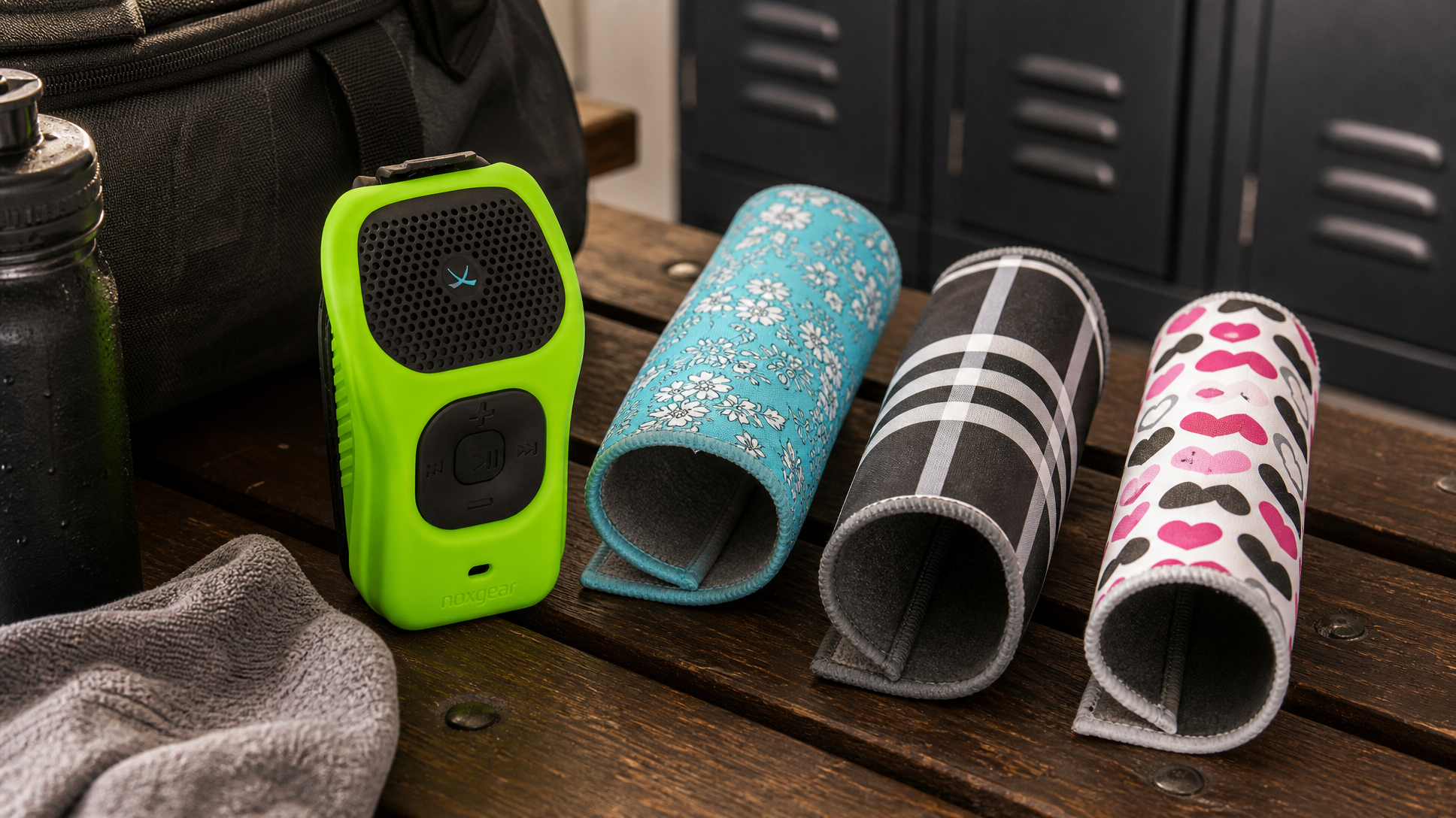
A wrap that's too loose slides off. One that's too tight is a struggle to get on and off, and it can stress the seams over time. The goal is a snug sleeve that holds its shape around your specific device. Before you buy, know the rough dimensions of what you're protecting — a compact Bluetooth speaker, a remote, a small media player — and match accordingly. Wraps like the Swag Rag and Buddha's Feast are designed as flexible neoprene sleeves, meaning the material conforms and stretches slightly to accommodate the device without bunching.
2. Interior Lining
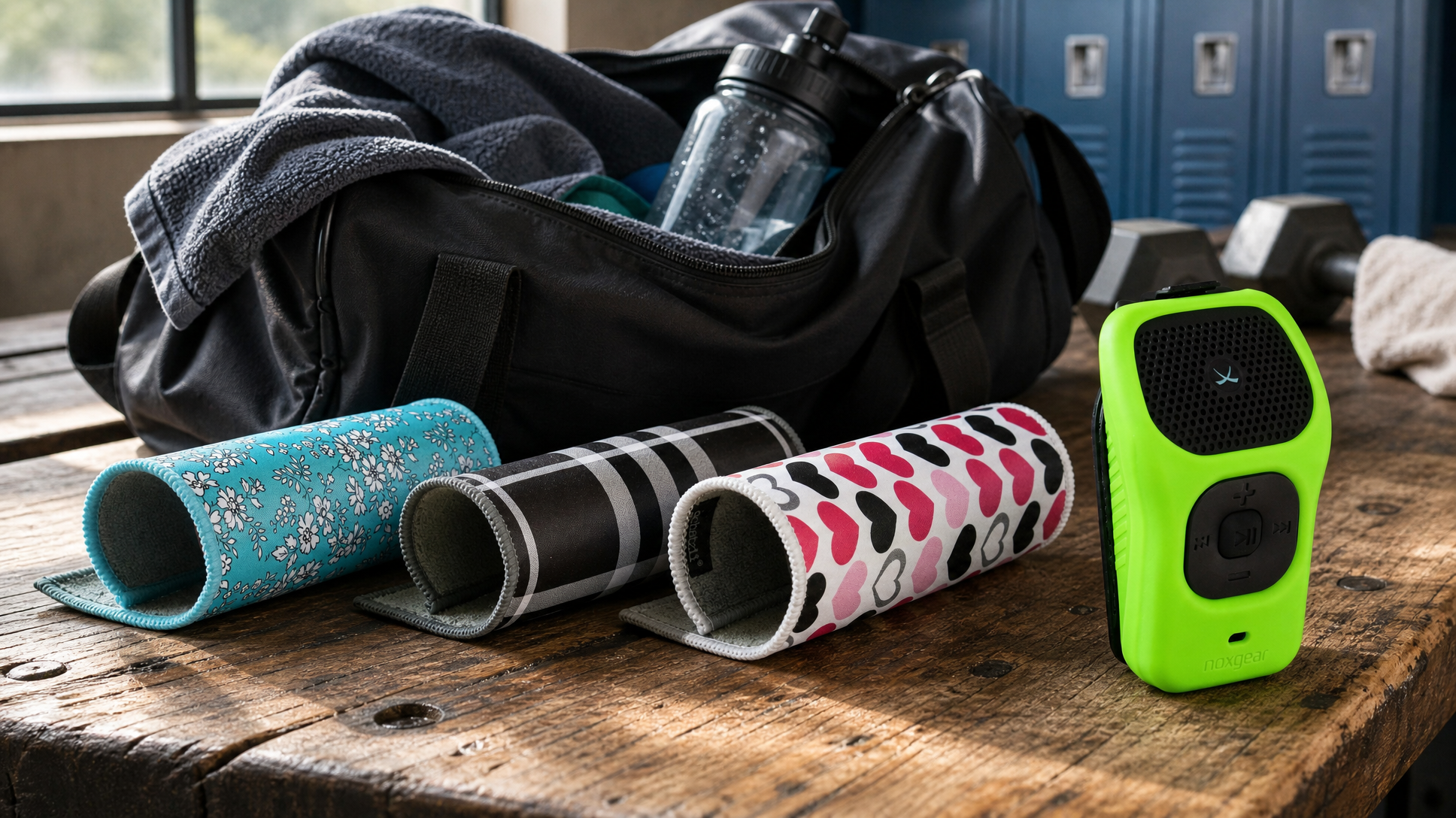
Look at the inside of the wrap, not just the outside. A soft interior lining — typically a fleece or terry-cloth-style fabric — is what actually prevents scratches on the device's surface. The neoprene outer shell handles impact and moisture; the inner lining handles the finish. Both the Swag Rag and Buddha's Feast show a soft grey interior lining in their construction, which is exactly what you want against a speaker grille or touchscreen surface.
3. Closure
A wrap with no closure is just a tube — the device can slide out the moment you tip the bag. Look for a velcro or fold-over closure that keeps things secured without adding complicated hardware that could scratch adjacent gear. The rolled-sleeve format you see in well-made neoprene wraps means you can fold the open end under to keep the device contained.
Matching the Wrap to Your Device
For something like the Noxgear 39G Bluetooth Speaker — a compact, clip-style speaker designed for active use — the primary protection layer is the speaker's own bright green silicone cover, which handles shock absorption and scratch resistance directly on the body. That silicone shell is a first line of defense. But inside a packed gym bag, even a silicone-covered device benefits from being wrapped: it keeps the speaker from rattling against keys or headphone cables, and it stops sweat from sitting against the charging port for an hour while you drive home.
For smaller remotes, media players, and compact audio accessories, a neoprene sleeve is often the only protection they get, so the wrap has to do the full job on its own.
A Note on Pattern: It's Not Just Aesthetic
The Buddha's Feast comes in a teal blue with a white floral pattern, and the Swag Rag is a bold dark plaid in charcoal and white stripes. The Where's the Love? goes with a white base covered in pink, black, and red hearts in varying sizes. These aren't random design choices — distinct patterns make it genuinely easier to grab the right wrap quickly in a cluttered bag. If everything is black, you're digging. If your electronics wrap has a recognizable pattern, it's the first thing you see.
It also means you can assign wraps to devices by pattern. Teal floral for the speaker, plaid for the remote, hearts for the media player — no more opening the wrap to check what's inside.
The Mistake Most People Make
They buy a wrap after something breaks. The whole point of protective gear is that it's boring — you never notice it working, you only notice when it's missing. A neoprene wrap costs a fraction of the device it's protecting, takes up almost no space in a bag, and lasts for years if you don't lose it first. Buying one now, before the sticky buttons and corroded ports, is the obvious move.
Browse protective wraps and audio accessories at Electroeshop's Audio Accessories collection — or check out the full Audio & Home Entertainment range if you're also in the market for something worth protecting in the first place.
Frequently Asked Questions
Is a neoprene wrap actually waterproof?
No — neoprene is moisture-resistant, not waterproof. It handles sweat, condensation, and light splashes well, which covers most gym bag and outdoor workout scenarios. If you need full submersion protection for a device, you'd need a purpose-built waterproof case instead.
Can I use a neoprene wrap with a speaker that already has a silicone case?
Yes, and it's actually a good combination. The silicone case protects against drops and scratches directly on the device, while the neoprene wrap adds a layer of moisture resistance and keeps the device from rattling against other gear inside your bag. Just make sure the wrap is sized to fit the device with the case on.
How do I clean a neoprene electronics wrap?
Most neoprene wraps can be hand-washed with mild soap and cool water, then air-dried flat. Avoid machine washing on a hot cycle or putting them in a dryer, as heat can degrade the neoprene over time. Check any care instructions included with the specific wrap you purchase.
How do I know which wrap size fits my device?
Check the dimensions of your device before buying. Neoprene stretches slightly, so a sleeve rated for a certain size range will accommodate devices at the upper end of that range — but a wrap sized for a large tablet won't grip a compact speaker properly. When in doubt, go snug rather than loose: a slightly tight fit stays in place better than a baggy one.