Cart
0
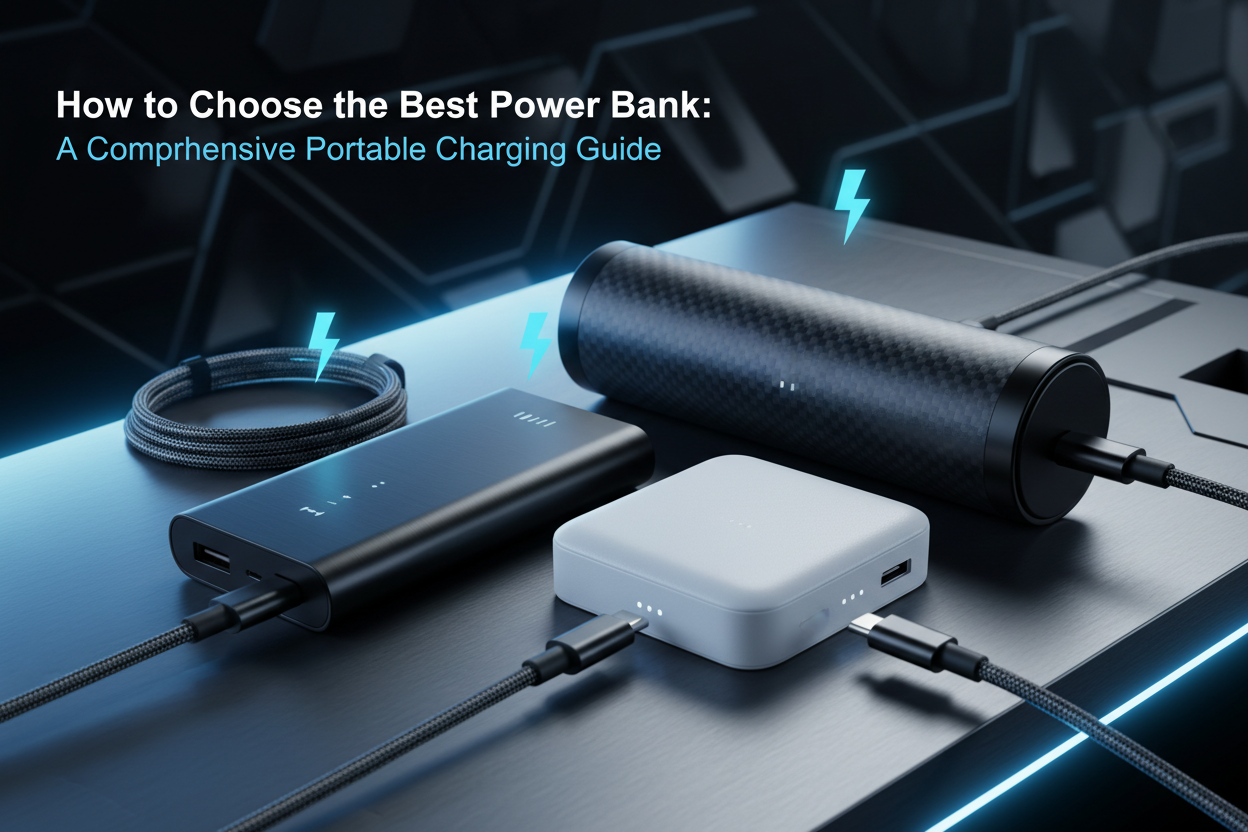
Choosing the right power bank is essential for staying connected and powered throughout your busy days or adventures. This comprehensive guide covers everything from battery capacity and charging speed to durability and safety, helping you select the perfect portable charger tailored to your lifestyle.
How to Choose the Best Power Bank: A Comprehensive Portable Charging Guide
- Understand mAh ratings and factor in usable capacity (about 65%).
- Match power bank capacity with your devices and charging needs.
- Look for fast charging technologies like USB-C PD and Quick Charge.
- Choose port types and multiple outputs to enhance flexibility.
- Consider rugged and solar-powered models for outdoor use.
- Prioritize safety features and certifications for device protection.
- Follow airline regulations when traveling with power banks.
- Explore trusted brands like INIU, NESTOUT, and TORRAS for quality options.
Table of Contents
- Understanding Power Banks and Battery Capacity
- Selecting the Appropriate Power Bank Capacity
- Charging Speed and Efficiency
- Port Options and Device Compatibility
- Durability and Outdoor Usage
- Smart Features and Safety Measures
- Traveling with Power Banks
- Highlighted Brands
- Final Considerations
1. Understanding Power Banks and Battery Capacity
A power bank acts as a portable energy reservoir that allows you to charge your devices without access to a wall outlet. The key specification to understand is the mAh rating, which indicates the battery capacity in milliampere-hours.
mAh Ratings vs. Usable Capacity
- Rated Capacity (mAh): The number shown on the packaging, e.g., 10,000mAh.
- Usable Capacity: Approximately 65% of rated capacity due to efficiency losses during voltage conversion.
For example, a 10,000mAh power bank effectively provides about 6,500mAh of useable charge, which translates to roughly two full charges for a smartphone battery around 3,200mAh.
Estimating the Number of Charges
Charging Times ≈ (Power Bank Capacity × 0.65) ÷ Device Battery Capacity
"Understanding usable capacity helps avoid paying for capacity you won’t effectively get, ensuring a better match to your needs."
2. Selecting the Appropriate Power Bank Capacity for Your Lifestyle
Choosing the right capacity depends on your device battery sizes, number of devices, and charging frequency.
- 5,000mAh: Best for light users needing approximately one full smartphone charge.
- 10,000mAh: Suitable for moderate daily use or short trips; around two full smartphone charges.
- 15,000mAh and above: Ideal for charging tablets, multiple devices, or long trips, though these are bulkier.
If using multiple devices, add their battery capacities and then select a power bank that meets or exceeds the total, factoring in a 30–35% energy loss to ensure sufficient power.
3. Charging Speed and Efficiency: Why It Matters
Fast charging saves time and enhances convenience. Consider both output and input charging speeds when selecting a power bank.
High-Output Ports
- Ports rated 2.1A or higher enable faster device charging.
- Support for USB Power Delivery (PD) or Qualcomm Quick Charge (QC) offers wattages from 18W to 45W or more.
- INIU power banks feature USB-C PD up to 45W for rapid charging of phones, tablets, and some laptops.
Input Charging Speed
Power banks with USB-C inputs supporting 18W+ recharge fully in 3–4 hours, much faster than older micro-USB inputs.
- Use original or certified fast-charging cables.
- Pair with power adapters of at least 9V/2A for optimal input speed.
4. Port Options and Device Compatibility for Enhanced Flexibility
The variety and number of ports determine how versatile and convenient your power bank is.
Port Varieties
- USB-A: Compatible with many older devices and cables.
- USB-C: Offers faster charging and data throughputs, also used for recharging the power bank itself.
- Built-In Cables: Integrated Lightning or USB-C cables reduce clutter and forgetfulness.
- Wireless Charging: Enables cable-free charging, perfect for compatible phones like iPhone 12 and newer.
Multiple Device Charging
Models such as INIU’s 20,000mAh power banks with three ports support simultaneous charging of phones, tablets, and earbuds — ideal for travel or work.
Magnetic Charging Compatibility
Power banks equipped with magnetic wireless charging work with iPhone 12 and later models. Proper alignment is necessary for efficient charging.
5. Durability and Outdoor Usage: Sturdy Power Banks for Adventurers
For rugged lifestyles, opt for power banks designed to withstand harsh environments.
Key Rugged Features
- Water Resistance: IP67 or IP68 ratings ensure protection against dust and water.
- Shockproof: Durable casings guard internal components.
- Dustproof: Essential for desert or forest conditions.
Brands like NESTOUT offer rugged power banks with modular accessories such as LED lights and fans, perfect for camping and emergencies.
Solar Charging
Solar-powered power banks enable recharging using sunlight, ideal for remote trips or emergencies. Check out NESTOUT’s solar-capable models here.
6. Smart Features and Safety Measures: Safeguarding Your Devices
Reliable battery management systems protect your devices and enhance usability.
Essential Safety Features
- Overcharge and Over-discharge Protection to prevent damage.
- Short Circuit Protection avoiding electrical hazards.
- Temperature Regulation to prevent overheating.
- Overvoltage/Overcurrent Protection ensuring safe power delivery.
Verify the presence of international safety certifications such as CE, FCC, RoHS, and UL to confirm compliance with global standards.
Additional Smart Features
- Pass-Through Charging: Charge both power bank and devices simultaneously.
- LED Indicators: Display current battery level and charging status.
- Auto-Shutoff: Stops charging once device is full to save energy and reduce heat.
Brands like INIU provide trustworthy power banks with features such as 3-year warranties and prompt customer support.
For detailed safety and smart feature insights, see this guide.
7. Special Considerations for Traveling with Power Banks
Traveling by air requires compliance with airline safety regulations to avoid complications.
Airline Guidelines
- Power banks under 100Wh (approx. 27,000mAh) are generally allowed in carry-on but not checked baggage.
- Check airline-specific limits on the number of batteries.
- Many reputable brands’ power banks fall safely within these limits (37Wh to 99.9Wh).
Packing Tips
- Keep power banks in hand luggage only.
- Protect terminals to prevent short circuits, using caps or protective cases.
More airline-specific guidance is available here.
8. Highlighted Brands: Which Power Bank Suits You the Best?
INIU: Compact Power with High Capacity
- Slim and lightweight designs with high mAh capacities (e.g., 20,000mAh with 65W output).
- Built-in cables and multiple ports for seamless convenience.
- Fast charging via USB-C Power Delivery.
- Strong customer service with 3-year warranties and 30-day return policies.
Examples include the Pocket Rocket P50 (10,000mAh/45W) and Cougar P63 (25,000mAh/100W), demonstrating that high capacity need not mean bulky.
Learn more about INIU’s collection here.
NESTOUT: Rugged and Outdoor-Ready
- IP67-rated water and dust resistance.
- Shockproof construction with modular accessories like LED lights and fans.
- Solar charging capability for extended outdoor use.
Ideal for campers, hikers, or emergency preparedness. Explore NESTOUT models here.
TORRAS: Wireless and Fast Charging Specialists
- Wireless charging capabilities for cable-free convenience.
- Advanced quick charge technologies supporting various devices.
- Sleek design balancing style and performance.
Final Considerations: Discover the Power Bank That Aligns With Your Lifestyle
Selecting the perfect power bank is straightforward when you focus on the essentials:
- Know your device battery capacities and practical usable power bank capacity.
- Balance charging speed, port variety, and portability.
- Consider ruggedness and solar options for outdoor needs.
- Choose power banks equipped with certified safety features.
- Follow airline rules when traveling by air.
- Opt for trusted brands with good warranties and support.
With these insights, you’ll confidently find a power bank that is reliable, efficient, and perfectly suited for your daily and travel requirements.
FAQ
What does the mAh rating on a power bank mean?
The mAh (milliampere-hour) rating indicates the battery capacity of the power bank—the total charge it can store. However, due to energy losses, the actual usable capacity is about 65% of the rated mAh.
How do I estimate how many times a power bank will charge my device?
Use this formula: Charging Times ≈ (Power Bank Capacity × 0.65) ÷ Device Battery Capacity. This accounts for efficiency losses and gives a realistic estimate.
Are fast-charging power banks worth it?
Yes, they reduce charging time significantly and improve convenience—especially important when you need a quick power boost during a busy day.
Can I take any power bank on a plane?
Most airlines allow power banks under 100Wh (approx. 27,000mAh) in carry-on luggage but not in checked baggage. Always verify your airline's specific policies.
What safety features should I look for in a power bank?
Look for overcharge, over-discharge, short circuit, temperature regulation, and overvoltage protections—plus recognized safety certifications like CE, FCC, RoHS, and UL.