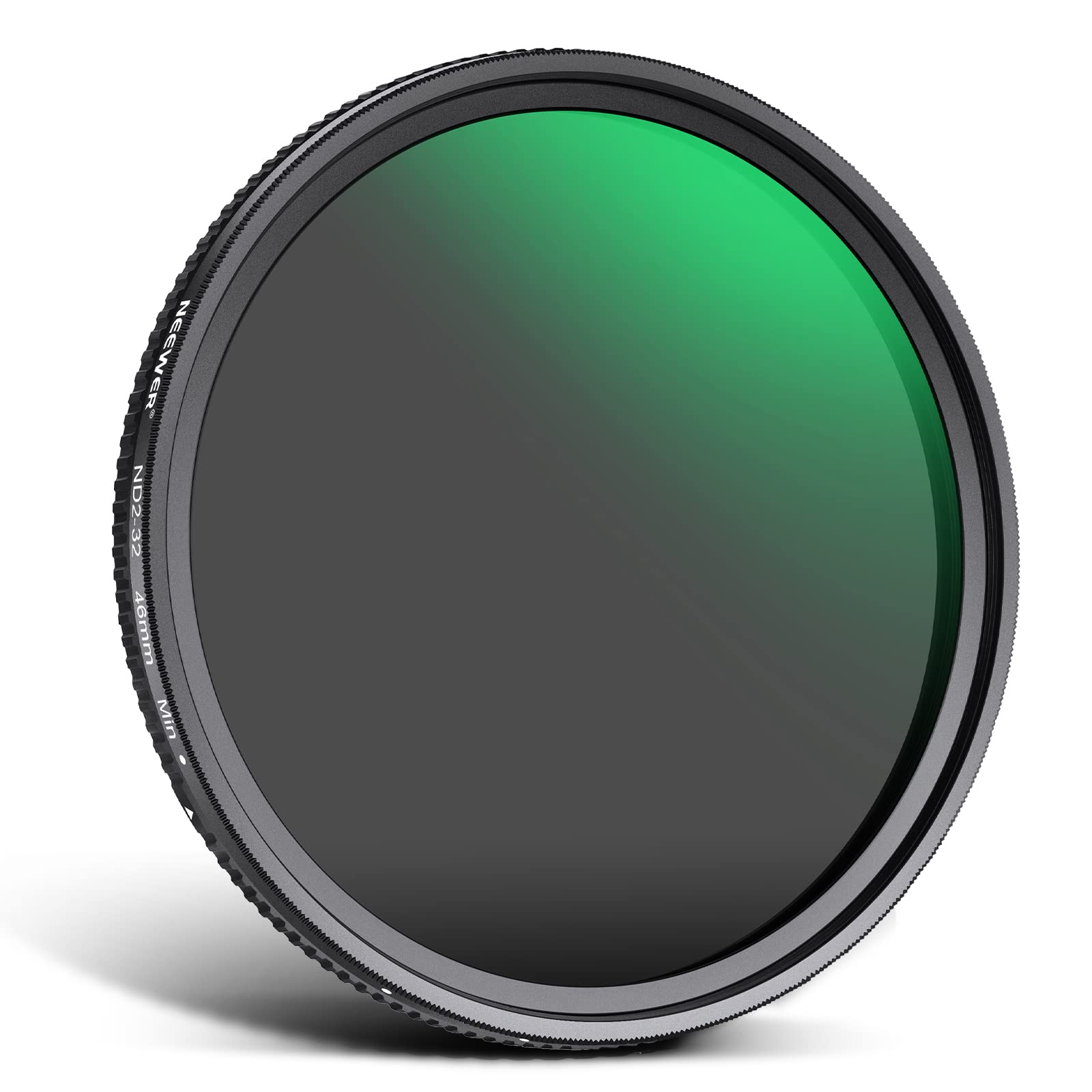
?1-5 Stops Variable Nd Filter? The Neewer Nd2-Nd32 Variable Filter Is Adjustable From 1 To 5 Stops, With A Rotating Ring To Reduce Light Intake And Extend Exposure Time When Shooting At Slower Shutter Speeds And Wider Apertures. Perfect For Capturing Rivers, Waterfalls, Light Trails And Other Moving Subjects With Dynamic Motion Blur. | ?Without Black ''X'' Cross? The Rotation Range Is Limited To Approximately 70
⚠️ WARNING (California Proposition 65): This product may contain chemicals known to the State of California to cause cancer, birth defects, or other reproductive harm. For more information, please visit www.P65Warnings.ca.gov.
Frequently Asked Questions
Q: What materials is the NEEWER Variable ND Filter made of?A: The NEEWER Variable ND Filter is made of imported Japanese AGC optical glass and an ultra-slim aluminum alloy frame. This combination ensures optimal light transmission and durability.
Q: What are the dimensions of the NEEWER ND Filter?A: The filter measures one point eighty-one inches in length and one point eighty-one inches in width, with a thickness of zero point twelve inches. This compact size allows for easy handling and storage.
Q: How many stops can the NEEWER Variable ND Filter adjust to?A: The filter can be adjusted from one to five stops. This range allows photographers to control light intake effectively for various shooting conditions.
Q: How do I use the NEEWER Variable ND Filter?A: To use the filter, simply attach it to the front of your lens and rotate the ring to adjust the density. This allows you to reduce light intake for longer exposures.
Q: Is the NEEWER ND Filter suitable for all types of lenses?A: While the filter is designed for wide-angle and telephoto lenses, some ultra-wide-angle lenses may exhibit vignetting. It’s important to test on your specific lens type.
Q: Can I use this filter for long exposure photography?A: Yes, the NEEWER ND Filter is great for long exposure photography, but for very long exposures, it's recommended to use a fixed ND filter like ND1000. This will prevent any potential cross-shaped artifacts.
Q: How should I care for the NEEWER ND Filter?A: To keep the filter in good condition, clean it with a microfiber cloth and avoid harsh chemicals. Store it in a protective case when not in use to prevent scratches.
Q: Is the NEEWER Variable ND Filter water-resistant?A: Yes, the filter is water-repellent and features multi-layer nano-coatings that protect against moisture. This helps maintain clarity and performance in various weather conditions.
Q: What should I do if the filter arrives damaged?A: If the NEEWER ND Filter arrives damaged, contact the seller or manufacturer immediately for a return or exchange. Ensure you have your order details handy for faster processing.
Q: How can I ensure accurate color reproduction with this filter?A: The NEEWER ND Filter is designed to provide optimal neutrality and color accuracy due to its high-end optical glass and multiple layers of coating. This minimizes color cast in your images.
Q: What is the main advantage of using the NEEWER Variable ND Filter?A: The main advantage is its ability to allow precise control over light intake, which is crucial for achieving desired effects in photography, especially in bright conditions.
Q: Does the filter help reduce glare and ghosting?A: Yes, the filter has thirty layers of nano-coating that reduce glare and ghosting, allowing for clearer images. This makes it ideal for shooting in challenging lighting situations.
Q: Is this filter suitable for beginners?A: Yes, the NEEWER Variable ND Filter is user-friendly and ideal for both beginners and professionals. Its adjustable feature simplifies learning about exposure control.
Q: How does this filter prevent the 'X' cross effect?A: The filter uses advanced technology that limits the rotation range, effectively eliminating the 'X' cross effect common in other variable ND filters. This enhances image quality.
Q: What type of photography is the NEEWER ND Filter best for?A: The filter is best for landscape photography, especially when capturing moving subjects like rivers and waterfalls. It allows for dynamic motion blur by extending exposure times.
Q: What if I notice vignetting with my telephoto lens?A: Vignetting may occur with telephoto lenses, which is a normal situation due to the filter's design. It's advisable to test the filter with your specific lens to evaluate its effects.