

Cart
0


Mini DC-DC Boost Converter 2.5-12V to 5V 8V 9V 12V Step Up Module 1A 96% Efficiency for 3.7V Li-ion Battery Arduino
Free Standard Shipping Across USA
Vendor: Electroeshop
Type:
Sku: 14:201659813#5pcs
Availability: In Stock
Couldn't load pickup availability
Guarantee safe checkout

Sold by Electroeshop, an authorized reseller.
Returns accepted within 30 days | support@electroeshop.com
Shipping Information
- Free Standard Shipping — United States only
- Processing Time: 3–5 business days
- Estimated Delivery: 6–10 business days after dispatch
- Double-boxed, fully insured & discreetly packaged
- Tracking number sent via email once dispatched
Returns & Refund
Returns accepted within 30 days of delivery.
Damaged or Defective Item
Free return shipping + replacement or full refund
Wrong Item Received
Free return shipping + replacement or full refund
Change of Mind
Return shipping at customer's expense · 25% restocking fee applies
All returns require a Return Authorization (RA) number before sending.
View Full Return & Refund Policy

Mini DC-DC Boost Converter 2.5-12V to 5V 8V 9V 12V Step Up Module 1A 96% Efficiency for 3.7V Li-ion Battery Arduino - 5pcs
$8.38

SPECIFICATIONS
Brand Name: NONE
Choice: yes
Condition: New
High-concerned chemical: none
Origin: Mainland China
Type: Module
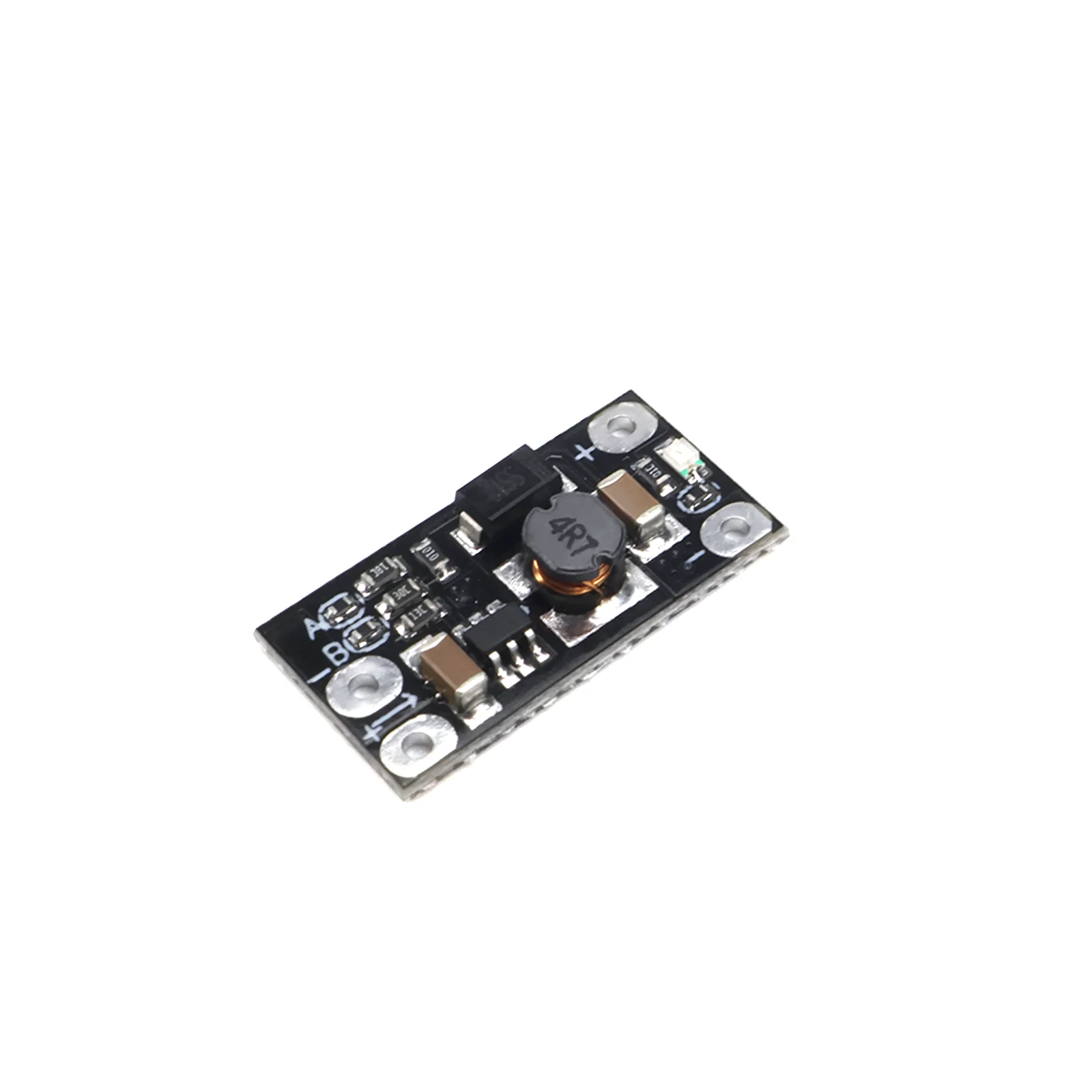
Mini DC-DC Boost Converter: 2.5-12V Input to 5V/8V/9V/12V Output, Voltage Selectable by Soldering Pads, 1A Output, 96% Efficiency – Flexible Boosting for Your 3.7V Lithium Battery Projects!
Key Features & Benefits:
📦 Ultra-Compact Size, Easy Integration: Only 22×11mm – smaller than a coin! Ideal for space-constrained portable devices, drones, and wearables.
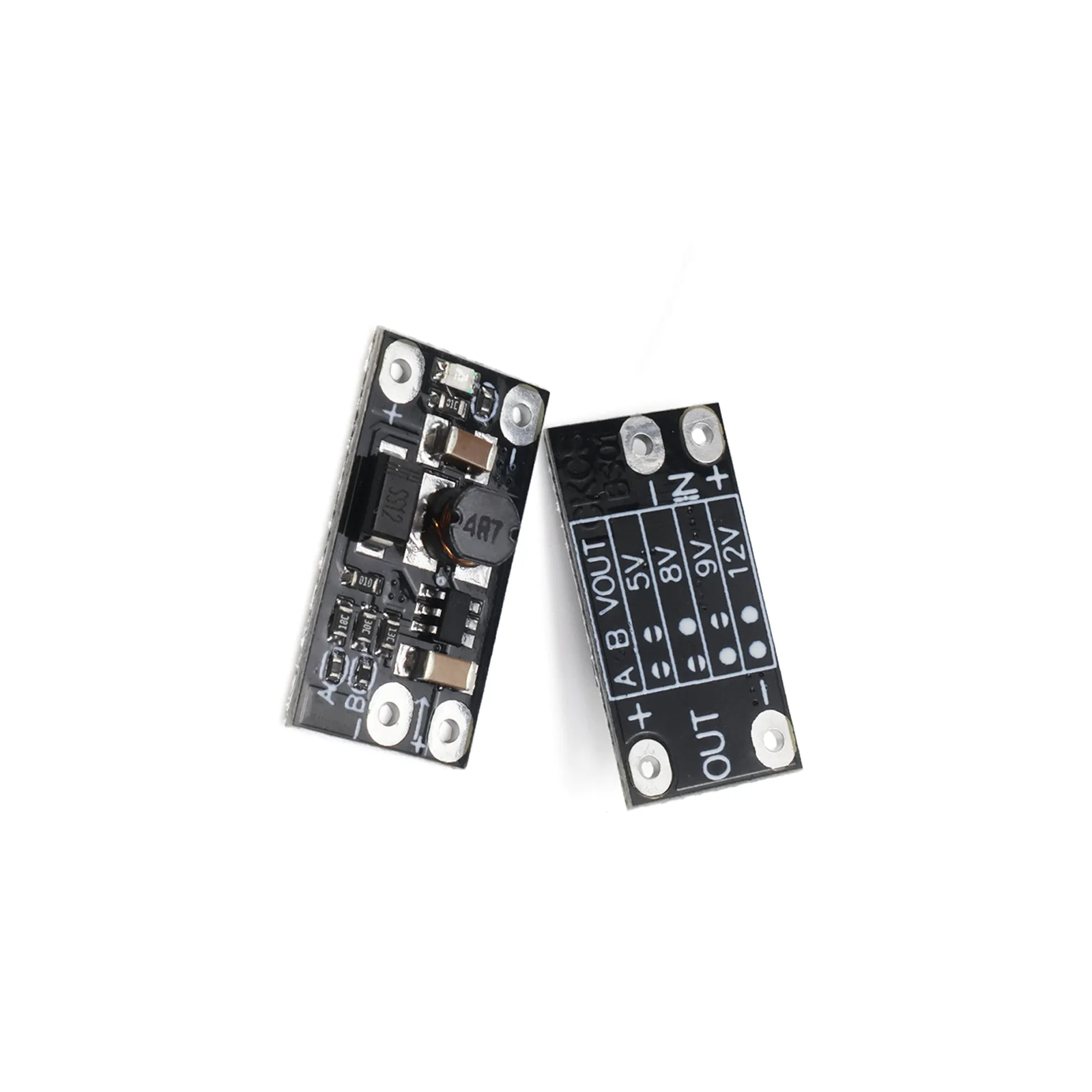
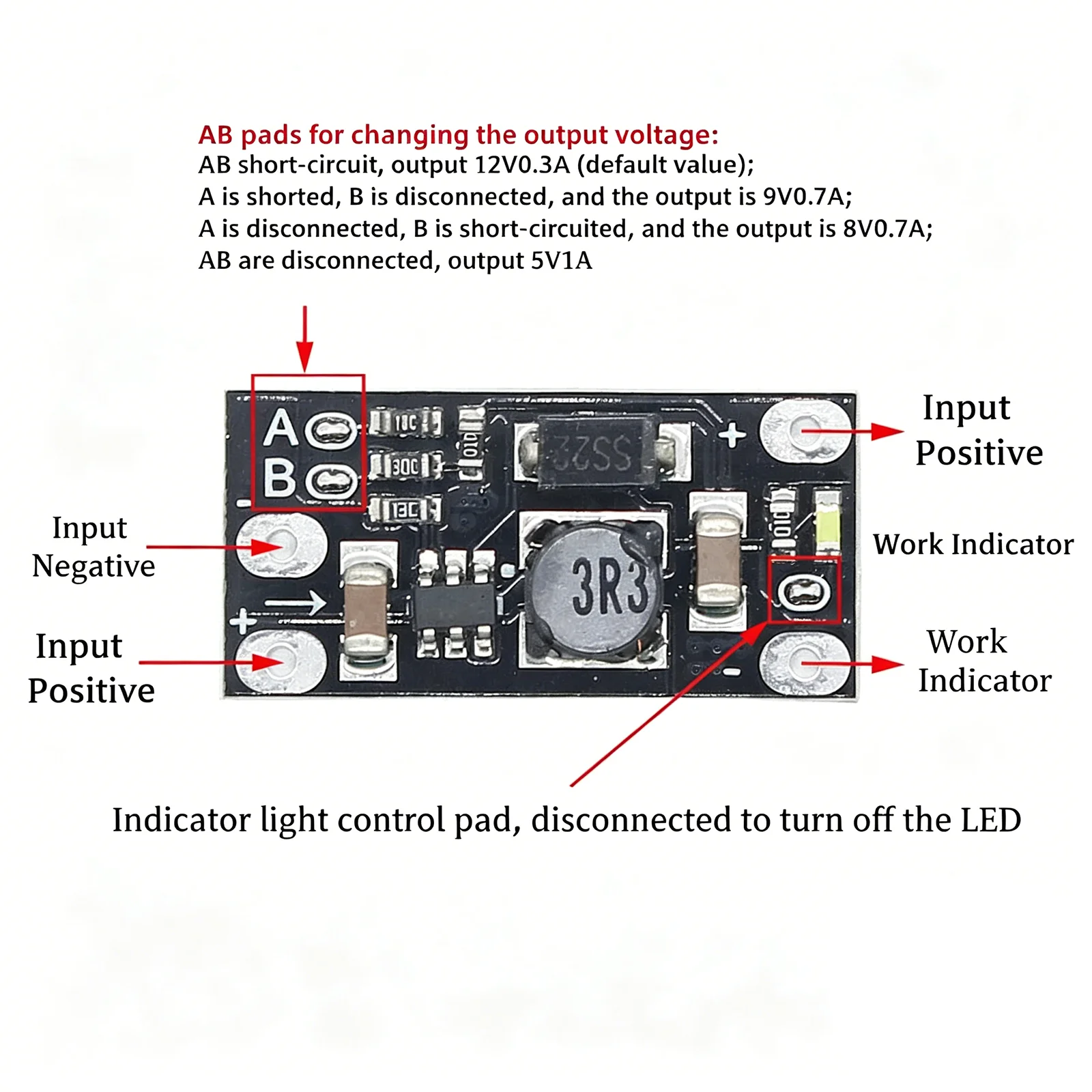
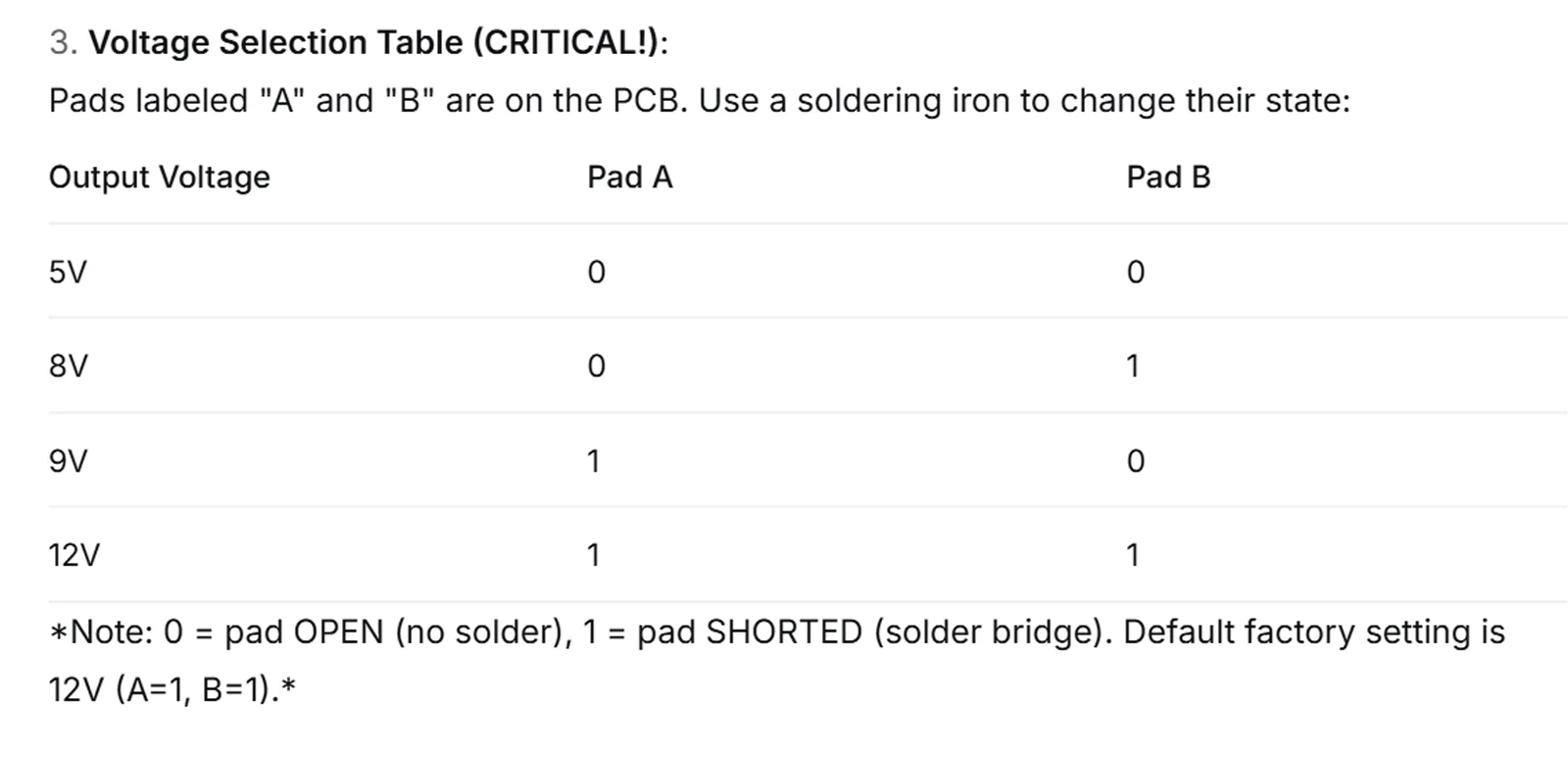
🔧 Selectable Output Voltage: Solder the A/B pads on the PCB to set output to 5V, 8V, 9V, or 12V (default 12V). No messy potentiometer adjustments.
⚡ Wide Input Voltage Range: Accepts 2.5V-12V DC – perfect for 3.7V Li-ion batteries, 5V USB power, multi-cell NiMH, etc.
💪 1A Output Capability: With 3.7V Li-ion input, delivers 5V/1A, 8V/0.5A, 9V/0.45A, or 12V/0.3A. Higher input (5V) increases output current.
🔋 High Efficiency, Low Quiescent Current: Up to 96% efficiency. With LED off, no-load current <1mA – ideal for battery-powered applications.
💡 LED Indicator: Onboard LED shows operation status (can be disabled by cutting a pad to save power).
Product Description:
This Mini DC-DC boost converter is a tiny solution for stepping up voltage from lithium batteries. It boosts 3.7V Li-ion or other 2.5-12V DC sources to 5V, 8V, 9V, or 12V – perfect for powering Arduino projects, sensor modules, portable speakers, drone receivers, and more. With up to 96% efficiency and ultra-low quiescent current, it's ideal for battery-powered designs. Output voltage is selected by soldering pads on the PCB – no trimpots, no confusion. Whether you're building a DIY power bank, retrofitting electronics, or adding a boost stage to your project, this module is the perfect choice.
🚨 Critical Notes Before Use!
❌ 【Important! Voltage Selection Method】:
This module does NOT use a potentiometer for voltage adjustment. Output voltage is set by soldering specific pads on the PCB. Basic soldering skills are required.
⚠️ 【Most Common Misconceptions & Misuse】
1. Input voltage MUST be lower than output! This is a BOOST converter. Input voltage must be less than or equal to the set output voltage. For 12V output, input must be ≤12V (preferably lower). If input exceeds the set output, the module will not function correctly.
2. Output current depends on input voltage: The module's output capability varies with input voltage and set output. With 3.7V Li-ion input:
5V output: max ~1A
8V output: max ~0.5A
9V output: max ~0.45A
12V output: max ~0.3A
With higher input (e.g., 5V), output current increases (12V0.5A). Do not overload.
4. LED can be disabled: To minimize no-load current, you can cut/open the pad next to the LED indicator – this turns off the LED (no-load current <1mA).
5. Input/output capacitors: For best stability, add a 22µF-100µF electrolytic capacitor across input and output.
✅ 【Correct Usage Steps】
Set Voltage: Solder the A/B pads according to the table above for your desired output.
Connect Input: Solder your power source (e.g., 3.7V Li-ion battery) to IN+ and IN- pads.
Connect Load: Solder your load (e.g., Arduino) to OUT+ and OUT- pads.
Optional - Disable LED: Cut the pad next to the LED for ultra-low power.
Power On: Measure output voltage with a multimeter to confirm.
🔧 【Additional Notes】
Dimensions: 22×11mm; ensure adequate space. Pad spacing 2.54mm.
Soldering Care: Pads are small – use a fine-tip iron and avoid solder bridges.
Heat Dissipation: The module will warm up near max output – normal. Ensure ventilation.
Applications: Perfect for DIY power banks, 3.7V to 12V converters, sensor node boost, etc.
Specifications
Model: Mini DC-DC Boost Module
Input Voltage: 2.5V – 12V DC
Output Voltage: Selectable 5V / 8V / 9V / 12V (default 12V)
Output Current: Depends on input and output voltage (see table)
With 3.7V input: 5V/1A, 8V/0.5A, 9V/0.45A, 12V/0.3A
With 5V input: 8V/0.7A, 9V/0.7A, 12V/0.5A
Efficiency: Up to 96%
No-Load Current: <1mA (LED off)
LED Indicator Current: ~1mA
Dimensions: 22mm × 11mm
Weight: Approx. 2g
Package Includes
1 × Mini DC-DC Boost Converter Module
Note: Input/output wires and capacitors are NOT included – choose the kit version if needed.
⚠️ WARNING (California Proposition 65):
This product may contain chemicals known to the State of California to cause cancer, birth defects, or other reproductive harm.
For more information, please visit www.P65Warnings.ca.gov.