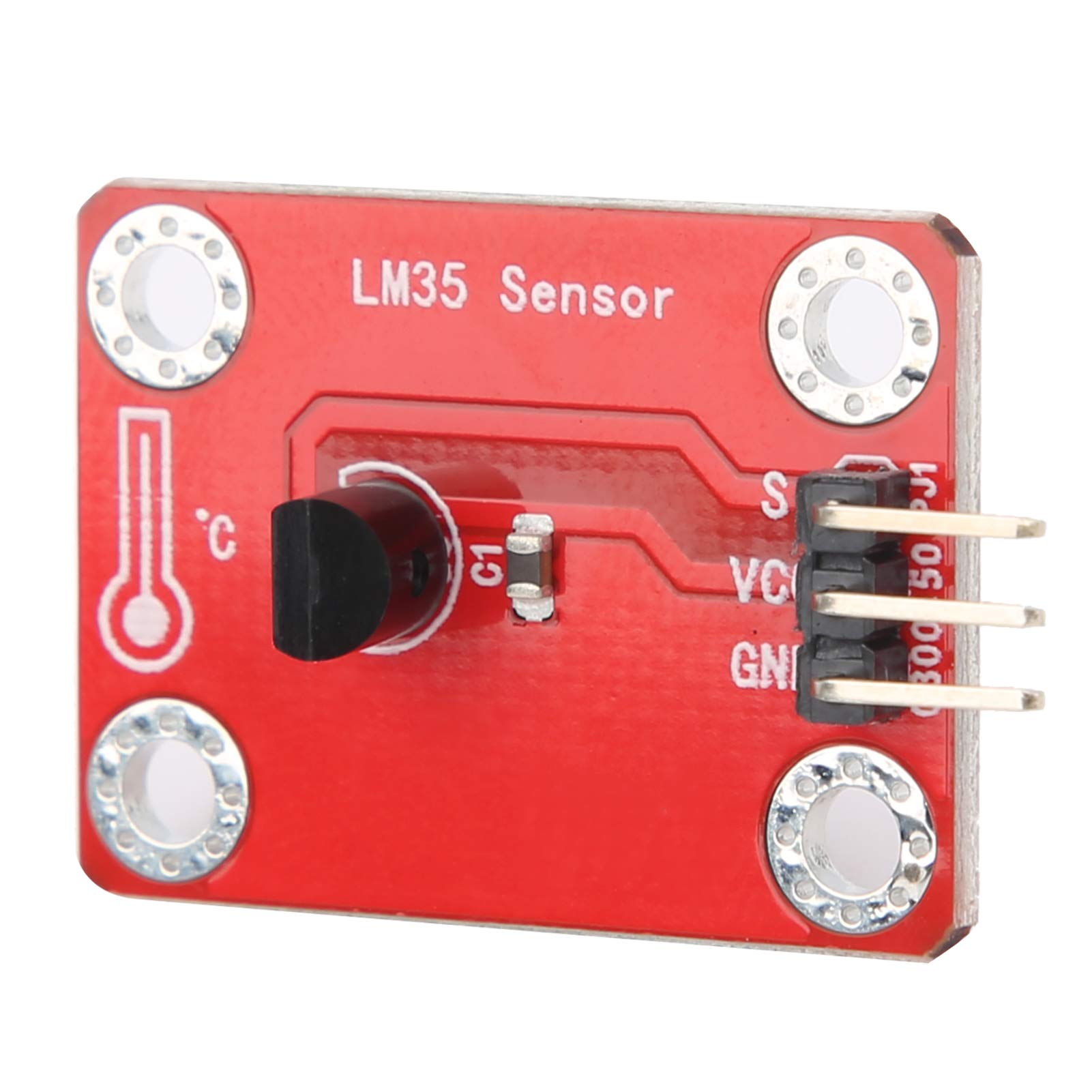
Specification: Item Type: Temperature Sensor Module Material: Pcb Application: Suitable For Operation, Learning And Development Of College Students, Engineers, Technicians, Factories, Individual Diy, Electronic Enthusiasts, Etc. Working Voltage: 3.3V-5Vdc Interface: 3Pin Interface Output : Analog Package List: 1 X Temperature Sensor Module
⚠️ WARNING (California Proposition 65): This product may contain chemicals known to the State of California to cause cancer, birth defects, or other reproductive harm. For more information, please visit www.P65Warnings.ca.gov.
Frequently Asked Questions
Q: What material is the LM35 Temperature Sensor Module made of?A: The LM35 Temperature Sensor Module is made of printed circuit board material. This ensures durability and reliability for various electronic applications.
Q: What voltage range does the LM35 Temperature Sensor operate within?A: The LM35 Temperature Sensor operates within a voltage range of three point three volts to five volts DC. This makes it versatile for different electronic projects.
Q: What is the output type of the LM35 Temperature Sensor?A: The output type of the LM35 Temperature Sensor is analog. It provides a voltage that is directly proportional to the temperature in degrees Celsius.
Q: What are the dimensions of the LM35 Temperature Sensor Module?A: The specific dimensions of the LM35 Temperature Sensor Module are not provided. However, it is compact and designed for easy integration into various projects.
Q: How do I use the LM35 Temperature Sensor Module?A: To use the LM35 Temperature Sensor Module, connect it to a microcontroller via the three-pin interface. Ensure it is powered within the specified voltage range and read the analog output.
Q: Is the LM35 Temperature Sensor suitable for beginners?A: Yes, the LM35 Temperature Sensor is suitable for beginners. It is designed for educational purposes and is easy to work with for DIY projects.
Q: Can the LM35 Temperature Sensor be used for industrial applications?A: Yes, the LM35 Temperature Sensor can be used for industrial applications. Its high precision makes it suitable for environmental and industrial control systems.
Q: What projects can I use the LM35 Temperature Sensor for?A: You can use the LM35 Temperature Sensor for various projects, including temperature monitoring systems, home automation, and educational experiments in electronics.
Q: How do I store the LM35 Temperature Sensor to ensure its longevity?A: To ensure the longevity of the LM35 Temperature Sensor, store it in a dry, cool place away from direct sunlight and moisture. Avoid physical damage during storage.
Q: What precautions should I take when using the LM35 Temperature Sensor?A: When using the LM35 Temperature Sensor, ensure it operates within the specified voltage range of three point three volts to five volts DC. Avoid exposing it to extreme temperatures.
Q: What should I do if the LM35 Temperature Sensor does not work?A: If the LM35 Temperature Sensor does not work, first check the power supply to ensure it is within the required voltage range. Also, verify all connections are secure.
Q: Is there a warranty for the LM35 Temperature Sensor Module?A: Warranty details for the LM35 Temperature Sensor Module are typically provided by the manufacturer. Check with the retailer for specific warranty information.
Q: Can I return the LM35 Temperature Sensor if I am not satisfied?A: Yes, you can return the LM35 Temperature Sensor if you are not satisfied, subject to the retailer's return policy. Ensure to keep the original packaging for a smooth return process.
Q: How do I clean the LM35 Temperature Sensor if it gets dirty?A: To clean the LM35 Temperature Sensor, gently wipe it with a soft, dry cloth. Avoid using any liquids or abrasive materials that could damage the sensor.
Q: Is the LM35 Temperature Sensor safe for educational use?A: Yes, the LM35 Temperature Sensor is safe for educational use. It is designed for learning and experimentation in controlled environments.
Q: Does the LM35 Temperature Sensor require calibration?A: The LM35 Temperature Sensor typically does not require calibration for general use. However, for precise applications, it may need to be calibrated against a known temperature standard.