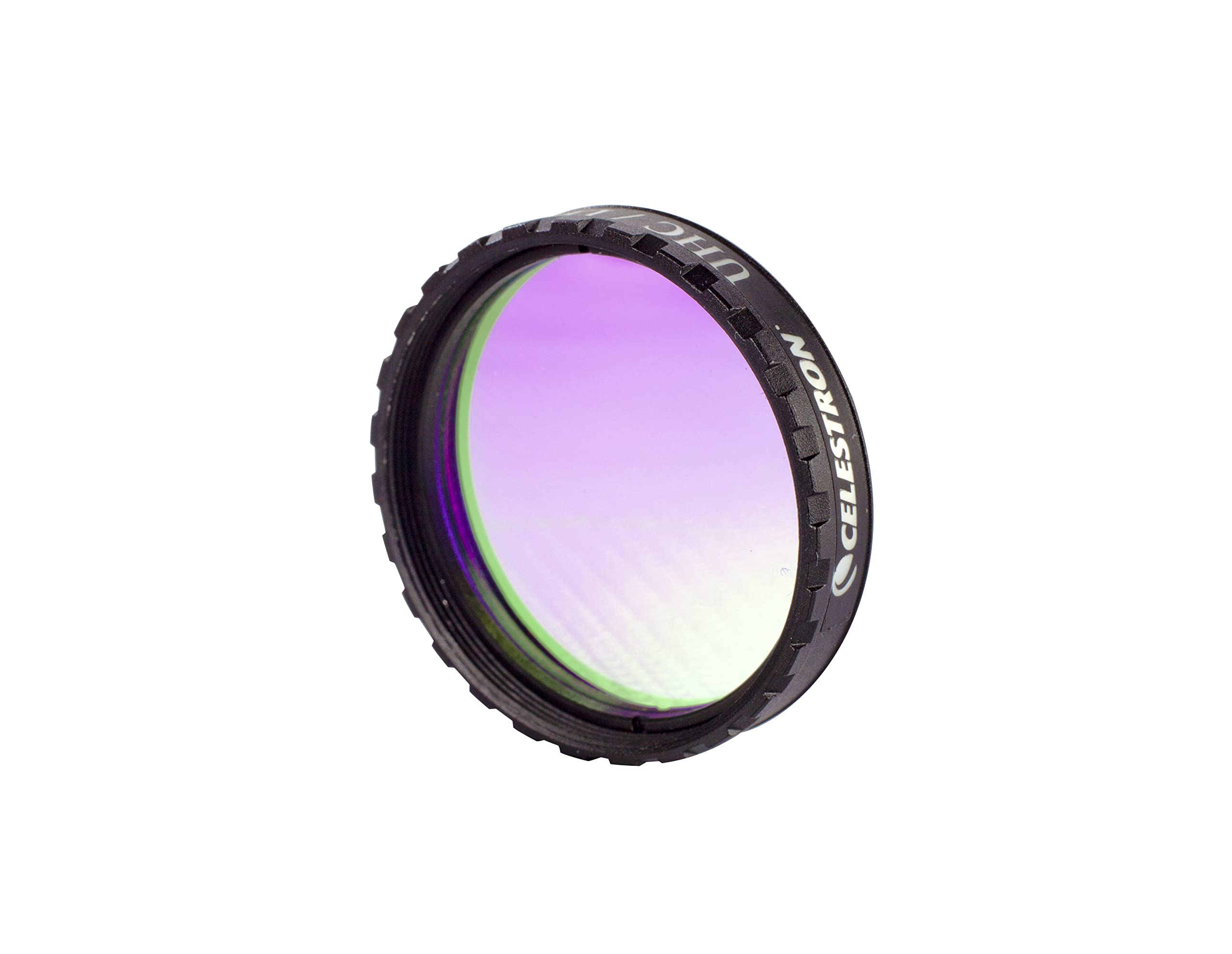
Our 1-1/4'' Light Pollution Reduction (Lpr) Filters Are Designed To Selectively Reduce The Transmission Of Certain Wavelengths Of Light, Specifically Those Produced By Artificial Light. This Includes Mercury Vapor, And Both High And Low Pressure Sodium Vapor Lights And The Unwanted Natural Light Caused By Neutral Oxygen Emission In Our Atmosphere (I.E. Sky Glow). The New Ultra High Contrast (Uhc) Lpr Filter Has Improved Contrast Over The Typical Broadband Filters. Sky Background Is Darker, And Contrast Of Emission Nebulae Are Noticeably Improved. The Advanced Technology Coatings Enable The Filter To Achieve An Outstanding Transmission Of Over 97% Across The Entire Bandpass, With Total Blockage Of Prominent Light Pollution Lines. The Perfect Filter For Viewing Nebula From Light Polluted Skies, Or For Boosting The Contrast Of Nebula From Dark Sky Sites. In Addition To It'S Optimum Spectral And Optical Characteristics, The Uhc/Lpr Filter Offers Important Features That Set It Apart And Result In The Highest Quality Celestial Views: The Multi-Layer Dielectric Coatings Are Plasma Assisted And Ionbeam Hardened Using The Latest Technology For Durability And Resistance To Scratching. Improved Transmission Translates To Maximum Image Brightness And Contrast. Users Of Smaller, 4''-11'' Telescopes Will Especially Appreciate The High Efficiency, And Larger Scope Users Will Love The Rich Star Fields And Detailed Subtle Nebular Shadings That Are Left Intact. The High Transmission, Sharp Cutoffs, And More Moderate 60Nm Passband Of The Uhc/Lpr Filter Retains A More Natural View, Yet Significantly Boosts Overall Contrast. Imagers Will Appreciate The Broader Bandpass And Inclusion Of An Extremely Efficient H-Alpha Passband (656Nm).
⚠️ WARNING (California Proposition 65): This product may contain chemicals known to the State of California to cause cancer, birth defects, or other reproductive harm. For more information, please visit www.P65Warnings.ca.gov.
Frequently Asked Questions
Q: What is the size of the Celestron UHC/LPR Filter?A: The Celestron UHC/LPR Filter is one and one-quarter inches in diameter, with a length of two and a half inches and a width of half an inch.
Q: What material is the Celestron UHC/LPR Filter made from?A: The filter is made from optical glass, which ensures high clarity and durability for clear celestial viewing.
Q: Does the Celestron UHC/LPR Filter have any special coatings?A: Yes, it features multi-layer dielectric coatings that enhance its optical performance and durability, providing over ninety-seven percent transmission.
Q: How do I use the Celestron UHC/LPR Filter?A: To use the filter, simply screw it onto the eyepiece of your telescope, aligning it properly to reduce light pollution during celestial observations.
Q: Is the Celestron UHC/LPR Filter suitable for all telescope sizes?A: Yes, this filter is designed for use with telescopes ranging from four inches to eleven inches, enhancing views for both small and large models.
Q: Can I use this filter for astrophotography?A: Yes, the Celestron UHC/LPR Filter is ideal for astrophotography, as it includes a broad bandpass and an efficient H-Alpha passband at six hundred fifty-six nanometers.
Q: How should I clean the Celestron UHC/LPR Filter?A: To clean the filter, use a soft, lint-free cloth and lens cleaning solution specifically designed for optical glass to avoid scratches.
Q: Is the Celestron UHC/LPR Filter resistant to scratching?A: Yes, it features Ionbeam hardened coatings that provide resistance to scratches, enhancing the durability of the filter.
Q: What is the best way to store the Celestron UHC/LPR Filter?A: Store the filter in a protective case or pouch to prevent dust accumulation and physical damage when not in use.
Q: How does the Celestron UHC/LPR Filter compare to standard filters?A: The UHC/LPR Filter offers improved contrast and darker sky backgrounds compared to standard broadband filters, making it superior for viewing nebulae.
Q: Is this filter good for beginners?A: Yes, the Celestron UHC/LPR Filter is user-friendly and enhances the viewing experience, making it a great choice for beginners and experienced astronomers alike.
Q: What if the Celestron UHC/LPR Filter arrives damaged?A: If the filter arrives damaged, you should contact the retailer for a return or replacement according to their warranty policy.
Q: What are the main benefits of using the Celestron UHC/LPR Filter?A: The main benefits include reduced light pollution, improved contrast for celestial objects, and enhanced clarity in various lighting conditions.
Q: Can I use the Celestron UHC/LPR Filter in urban areas?A: Yes, this filter is specifically designed to reduce the effects of light pollution common in urban areas, making it perfect for city stargazing.
Q: Does the Celestron UHC/LPR Filter affect color perception?A: While it enhances contrast and clarity, the filter maintains a natural view with sharp cutoffs, allowing for accurate color perception of celestial objects.