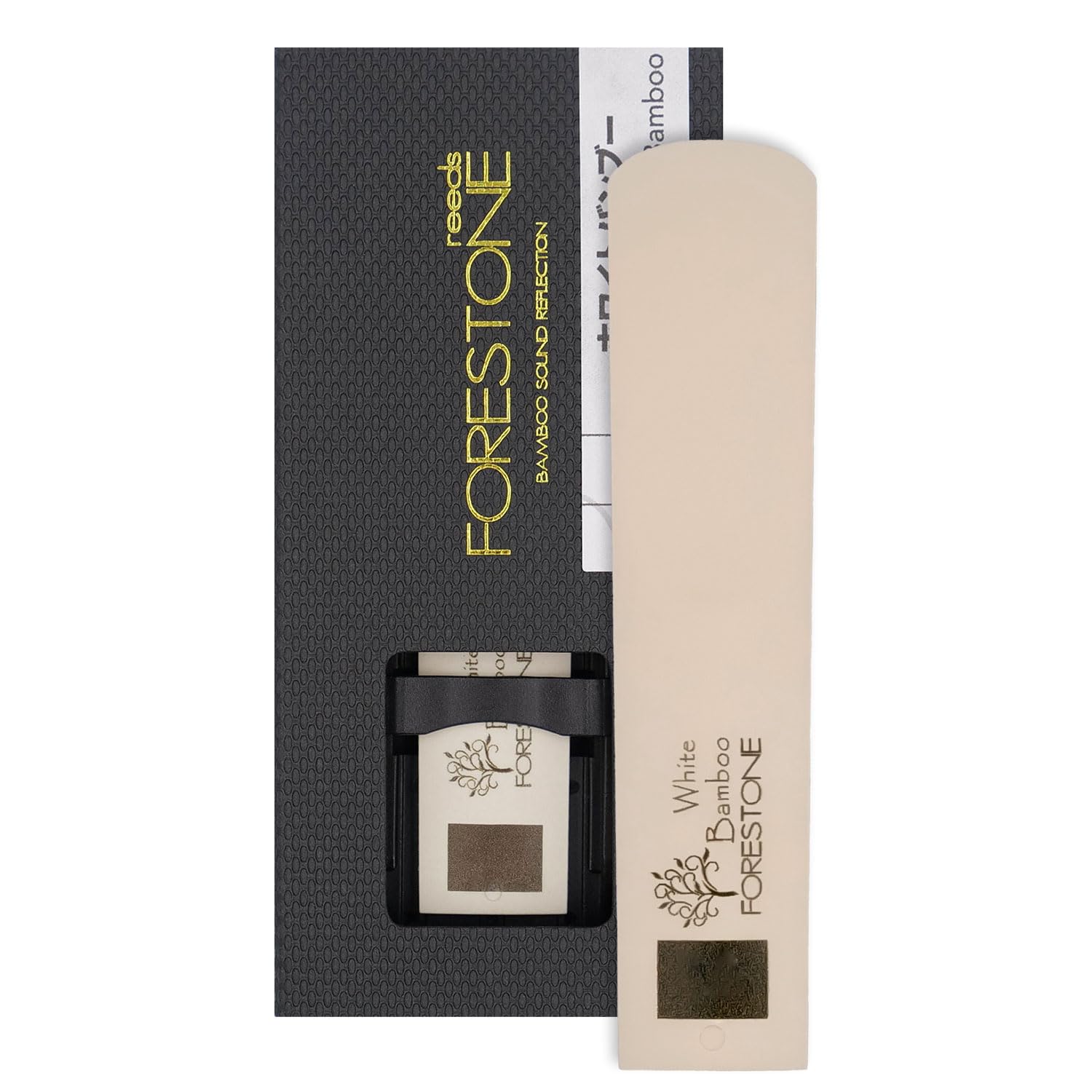
The Forestone Material Is A Mixture Of Synthetic Resin And Wood Fiber, More Than 50 Percent Of Which Is Bamboo. It Is Tasteless, Odorless And Non-Toxic. The Exceptional Sound, Resilience And Flexibility Of Forestone Reeds Is Due Mainly To This Special Material. Forestone Reeds Are Made By A Proprietary Process Developed In Japan Resulting In Optimally Smooth Vamps That Are Uniform And Consistent, Reed To Reed. They Are Perfectly Balanced Side To Side And Front To Back. The Profile Tapers To A 0.1 Mm Thickness Across The Tip. Held Up To Light, The Reeds Display The Classic Upside-Down-U Shape Associated With Cane Reeds. Feel The Difference In Feel Between Forestone And Cane Is Minimal. That Said, We Recommend To Take Some Time To Get Comfortable With Forestone, In The Same Way You Would With Any New Equipment. Adjustment Blowing Resistance Can Be Adjusted With Forestone Reeds By Slightly Raising Or Lowering The Reed On The Mouthpiece Table (Lower = Less Resistance, Higher = More Resistance). The Material Is Also Sufficiently Hard That You Can Use Your Usual Reed Tools For Adjustment. Longevity The Life Of A Forestone Reed Will Vary From Player To Player But Will Outlast Cane As The Material Is Impervious To Breakdown By Saliva And Will Not Warp Due To Changes In Humidity Or Altitude. After A Certain Number Of Hours, However, The Reeds Will Begin To Feel Less Lively And Responsive. This Signals The Time Has Come To Retire The Reed In Favor Of A Newer One. Models Traditional: French Filed Cut And Is Very Free Blowing For Easy Playing. It Has A Bright Round Sound. Hinoki: American Unfiled Cut, For A Lively Response And A Free Sound. More Character And Dynamic Range Than The Traditional Model. Black Bamboo: French Filed Cut, More Resistance And More Control. It Produces A Dark Classical Sound. White Bamboo: French Filed Cut With A Lively Response And A Free Sound. This Is The All-Rounder, Made For Use In All Styles.
⚠️ WARNING (California Proposition 65): This product may contain chemicals known to the State of California to cause cancer, birth defects, or other reproductive harm. For more information, please visit www.P65Warnings.ca.gov.
Frequently Asked Questions
Q: What materials are used in the Forestone alto saxophone reed?A: The Forestone alto saxophone reed is made from a hybrid material that includes calcium-enriched bamboo fibers and synthetic resin. This composition provides resilience and flexibility for optimal performance.
Q: What size is the Forestone alto saxophone reed?A: The Forestone alto saxophone reed is available in size four point zero. This size is suitable for experienced players seeking a balanced sound profile.
Q: Is the Forestone reed safe to use?A: Yes, the Forestone reed is tasteless, odorless, and non-toxic. Its materials ensure safe usage for musicians.
Q: How do I play with the Forestone alto saxophone reed?A: To use the Forestone alto saxophone reed, place it on the mouthpiece and adjust its height for desired blowing resistance. This allows for comfortable playing and sound control.
Q: Is this reed suitable for beginners?A: Yes, the Forestone reed can be suitable for beginners. However, it is recommended to take time to adjust to its unique feel compared to traditional cane reeds.
Q: How can I adjust the Forestone reed for better performance?A: You can adjust the Forestone reed by slightly raising or lowering it on the mouthpiece table. Lowering it reduces resistance, while raising it increases resistance.
Q: What is the lifespan of a Forestone reed?A: The lifespan of a Forestone reed typically outlasts that of cane reeds. It is impervious to breakdown by saliva and does not warp due to humidity or altitude changes.
Q: How should I store my Forestone reed?A: Store your Forestone reed in a protective case to prevent damage. Avoid exposure to extreme temperatures and humidity to maintain its longevity.
Q: Can I clean the Forestone reed?A: Yes, you can clean the Forestone reed gently with a soft cloth. Avoid harsh chemicals or excessive moisture that could damage the reed.
Q: What if my Forestone reed arrives damaged?A: If your Forestone reed arrives damaged, you should contact the seller for a replacement or refund. Ensure to report the issue as soon as possible.
Q: How does the Forestone reed compare to cane reeds?A: The Forestone reed offers a similar feel to cane reeds but provides better longevity and consistent performance in varying conditions. It eliminates common issues like warping.
Q: Is the Forestone reed versatile for different musical styles?A: Yes, the Forestone reed is engineered for versatility. It supports a dynamic range of musical styles, from jazz improvisation to classical performance.
Q: What is the best way to break in a Forestone reed?A: To break in a Forestone reed, play it gently to allow it to adjust to your mouthpiece and playing style. Gradually increase playing time for optimal performance.
Q: Are there different models of Forestone reeds available?A: Yes, Forestone offers several models, including Traditional, Hinoki, Black Bamboo, and White Bamboo, each designed for different playing characteristics.
Q: What is the blowing resistance like for the Forestone reeds?A: The blowing resistance of Forestone reeds is adjustable, allowing players to customize their experience based on personal preference and playing style.